







Working Principle and Maintenance of Reverse Osmosis Water Treatment Equipment (2)
IV. Reverse Osmosis System Introduction
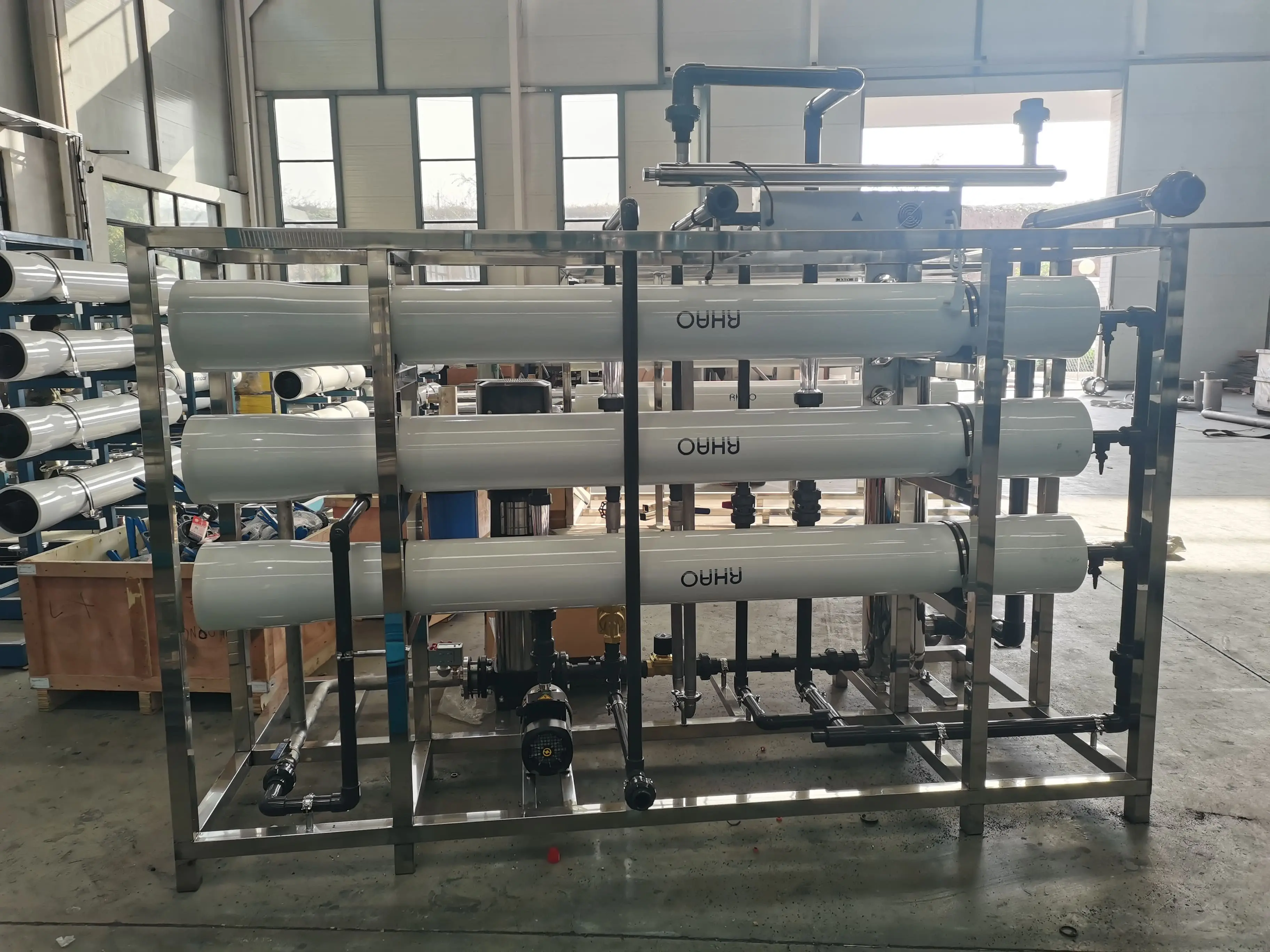
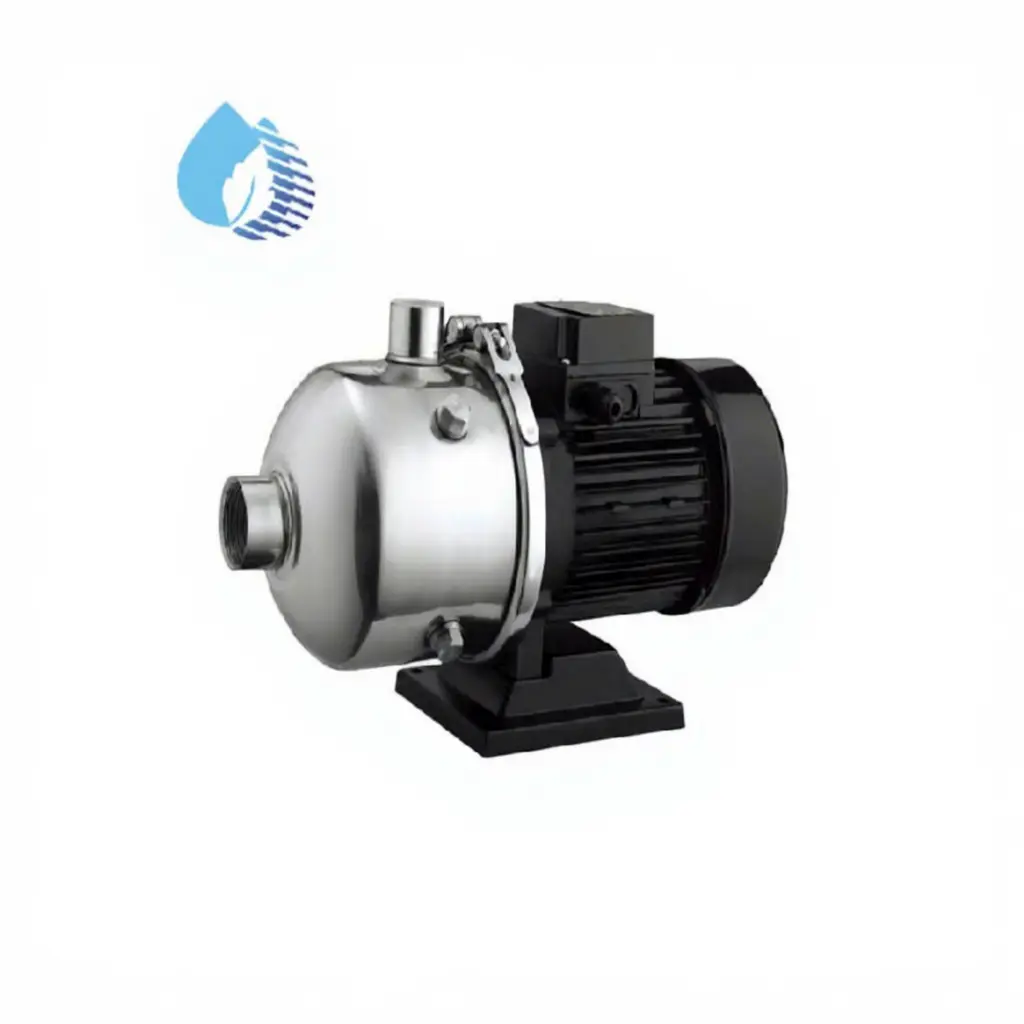
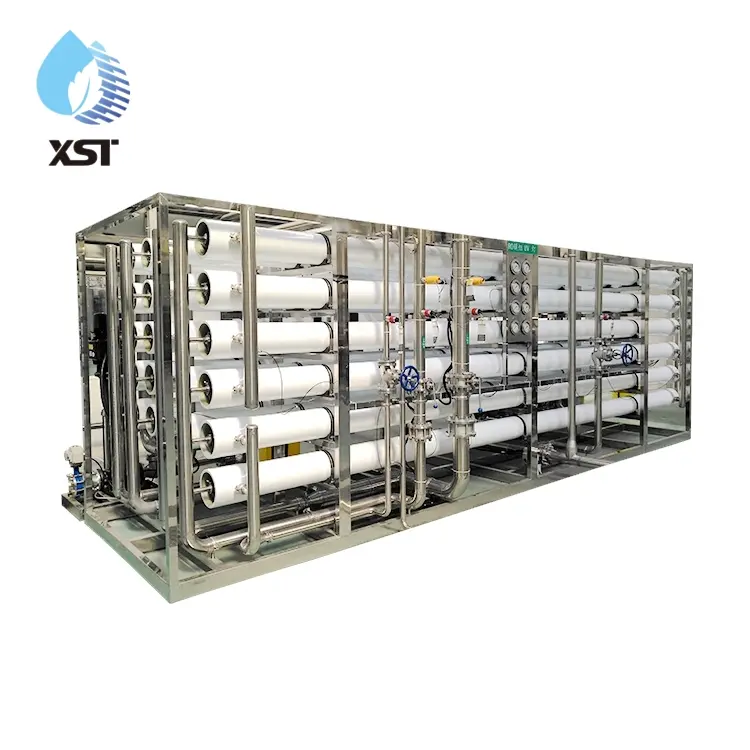
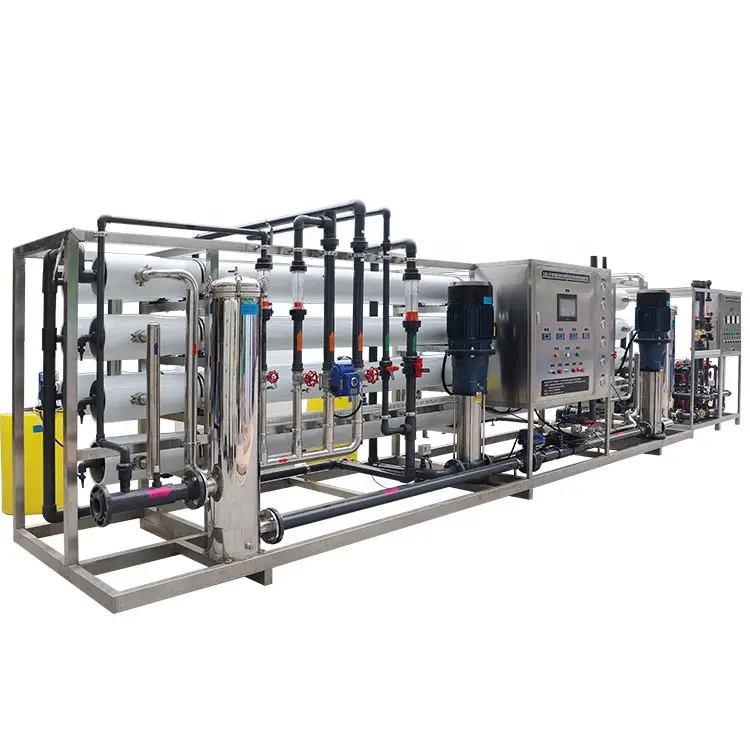
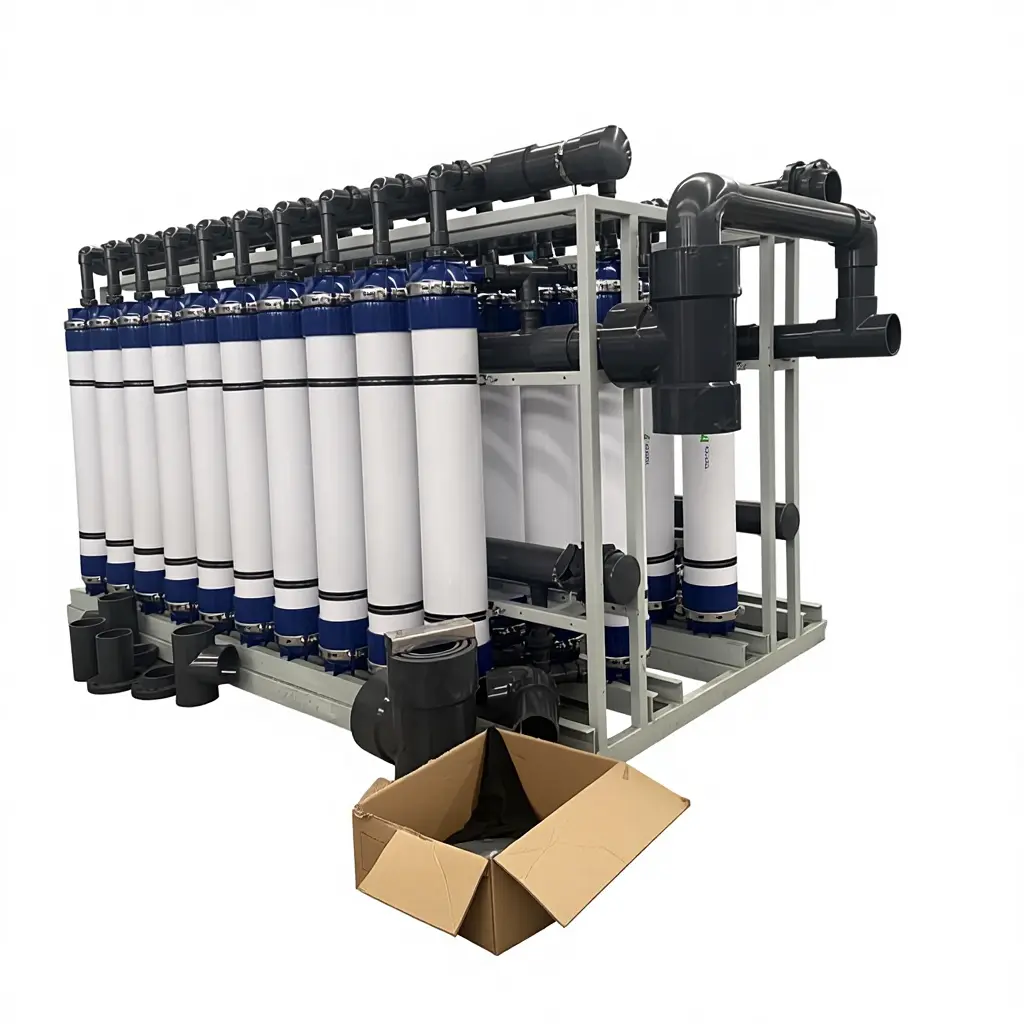
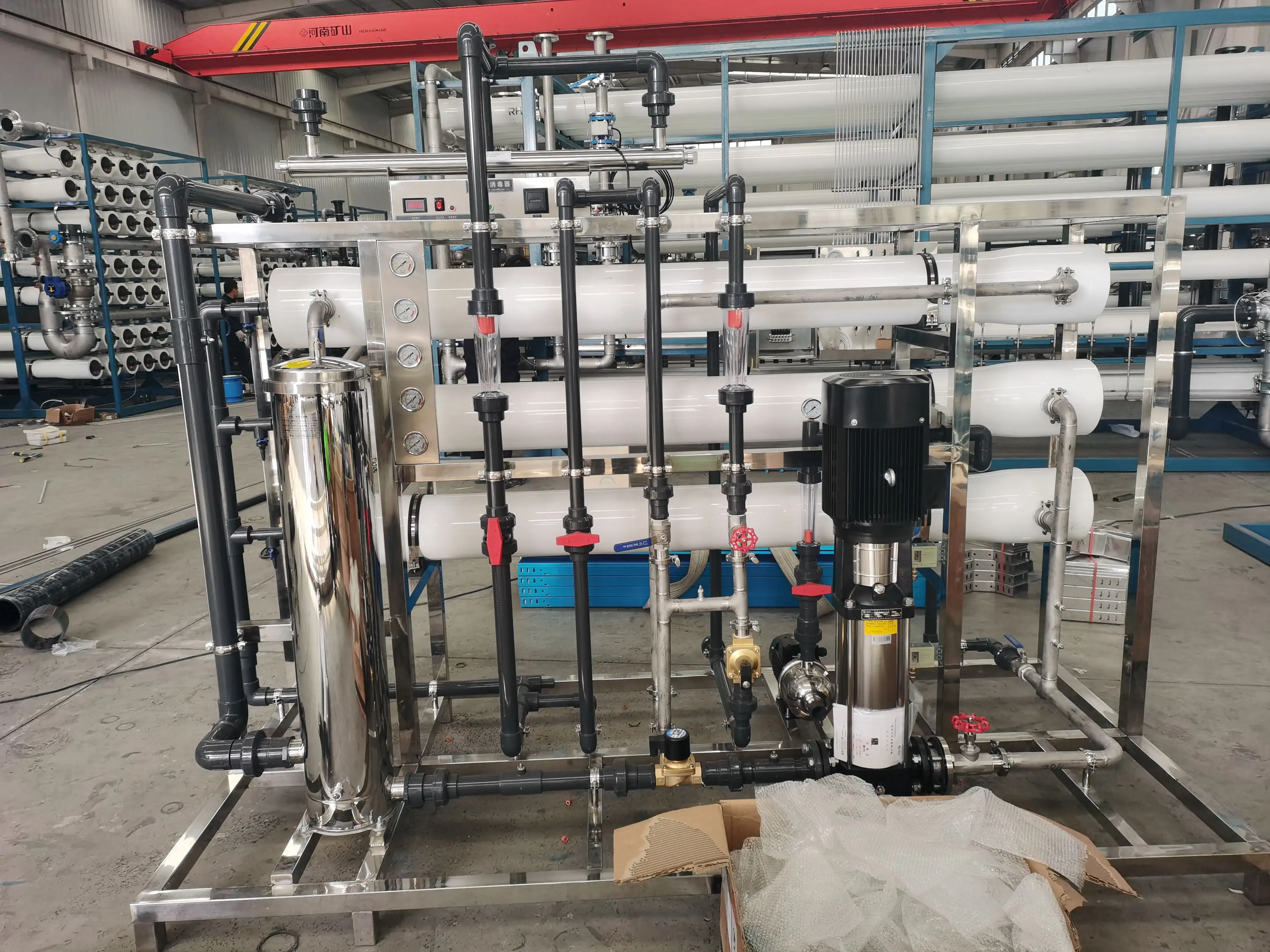
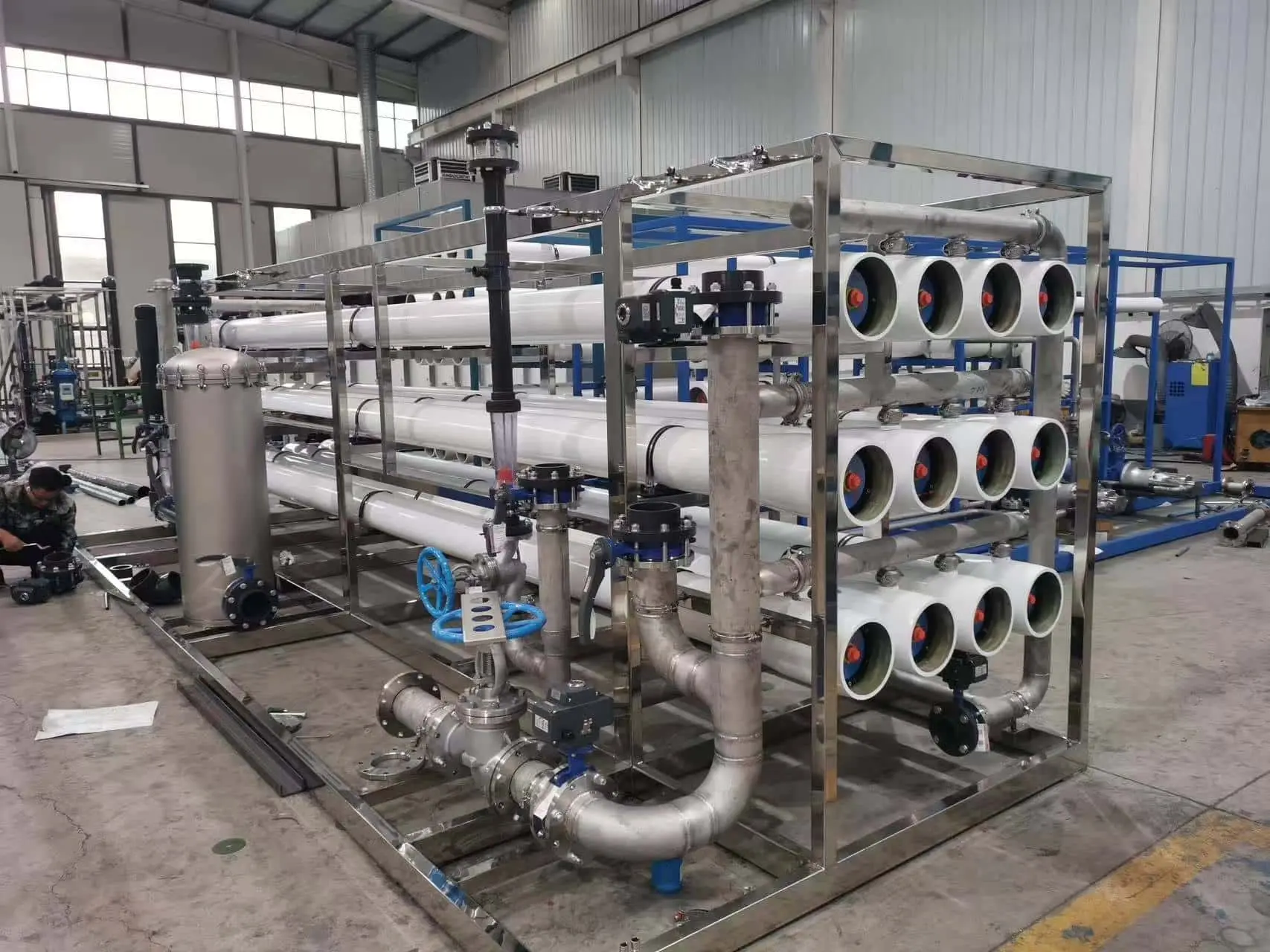
The reverse osmosis system primarily consists of a multi-stage high-pressure pump, reverse osmosis membrane elements, membrane housing (pressure vessel), and support. Its primary function is to remove impurities from water, ensuring that the output water meets usage requirements. The high-pressure pump boosts the output water from the safety filter to the RO operating pressure and then evenly distributes it to the pressure vessel. The water flow is separated by the reverse osmosis membrane, forming two streams within the pressure vessel. A portion of the incoming water passes through the membrane to form Pure Water, while the remaining inorganic salts and solid residues are retained and concentrated to form concentrate, thus separating the inorganic salts from the water.
Pure water flows from each pressure vessel equipped with the reverse osmosis membrane element, merges, passes through a flowmeter, and then flows out of the system's outlet into the pure water tank. Concentrate water then flows out of the concentrate outlet of the pressure vessel.
Reverse osmosis membrane desalination mechanism: The surface of the semipermeable membrane is covered with numerous extremely fine pores. The membrane selectively adsorbs a layer of water molecules, while salt solutes are repelled by the membrane. Ions with higher valence are repelled further. Driven by the reverse osmosis pressure, the water molecules surrounding the pores flow out of the membrane through capillary action, achieving the desalination effect.
When the membrane pores are larger than the pore size of the reverse osmosis membrane, aqueous salt solutions will leak through the membrane. Monovalent salts leak more frequently, followed by divalent salts, and less frequently, trivalent salts. The pore size of RO membranes is <1.0 nm, so RO membranes can filter out Pseudomonas aeruginosa, one of the smallest bacteria (3000 × 10⁻¹⁰m); they can also filter out various viruses, such as influenza virus (800 × 10⁻¹⁰m) and meningitis virus (200 × 10⁻¹⁰m); and they can even filter out pyrogens (10-500 × 10⁻¹⁰m). Reverse osmosis (RO) produces pure water with the following advantages: compact equipment structure and easy maintenance, small footprint, and high water output. It produces pure water without phase change, resulting in low energy consumption. Furthermore, it produces no acidic or alkaline wastewater, making it a new energy-saving and environmentally friendly device.
The typical wastewater-to-purified water ratio in a RO system is 3:1 for small household water purifiers, 1:1 for small industrial RO systems, and 0.3:0.7 for large systems. Further reductions in wastewater discharge are costly and will inevitably shorten the lifespan of the RO membrane.
This advanced membrane separation technology is widely used in various fields.
V. Reverse Osmosis System Maintenance
1. Conduct daily water quality testing and record equipment operating parameters, addressing any anomalies promptly. Regularly test and record key parameters such as pure water conductivity, pressure at various points, and inlet and outlet flow rates.
2. Regularly add regeneration agent to the salt tank, setting the regeneration time based on site conditions and water output. Regeneration is generally done every 3-4 days.
3. Replace the safety filter element promptly (generally every 3-6 months).
4. Wipe the machine frequently to keep it clean.
5. Regularly check the pipes for leaks and address them promptly.
6. Ensure the normal water and power supply to the equipment. In the event of a power outage or water outage, the equipment timer must be reset, especially the regeneration timer. Unauthorized personnel are prohibited from touching the buttons on the electronic control unit or valves in the pipes to prevent improper operation that could cause the equipment to malfunction.
VI. Emergency Measures: If the equipment loses power or if the main pump, membrane, or other pure water-generating components are damaged, the softened water valve can be opened to continue using softened water to ensure normal operation of the water-using equipment. This method should be tailored to the specific requirements of the water-using equipment.
1. If the equipment leaks significantly, immediately turn off the water inlet and power to the equipment and notify the service provider.
2. During the water production process, if the post-membrane pressure gauge exceeds 1.5 MPa, the conductivity exceeds 15 µs/cm, or the produced water quality exceeds the standard range, the resin, membrane, activated carbon, and other consumables should be replaced promptly.
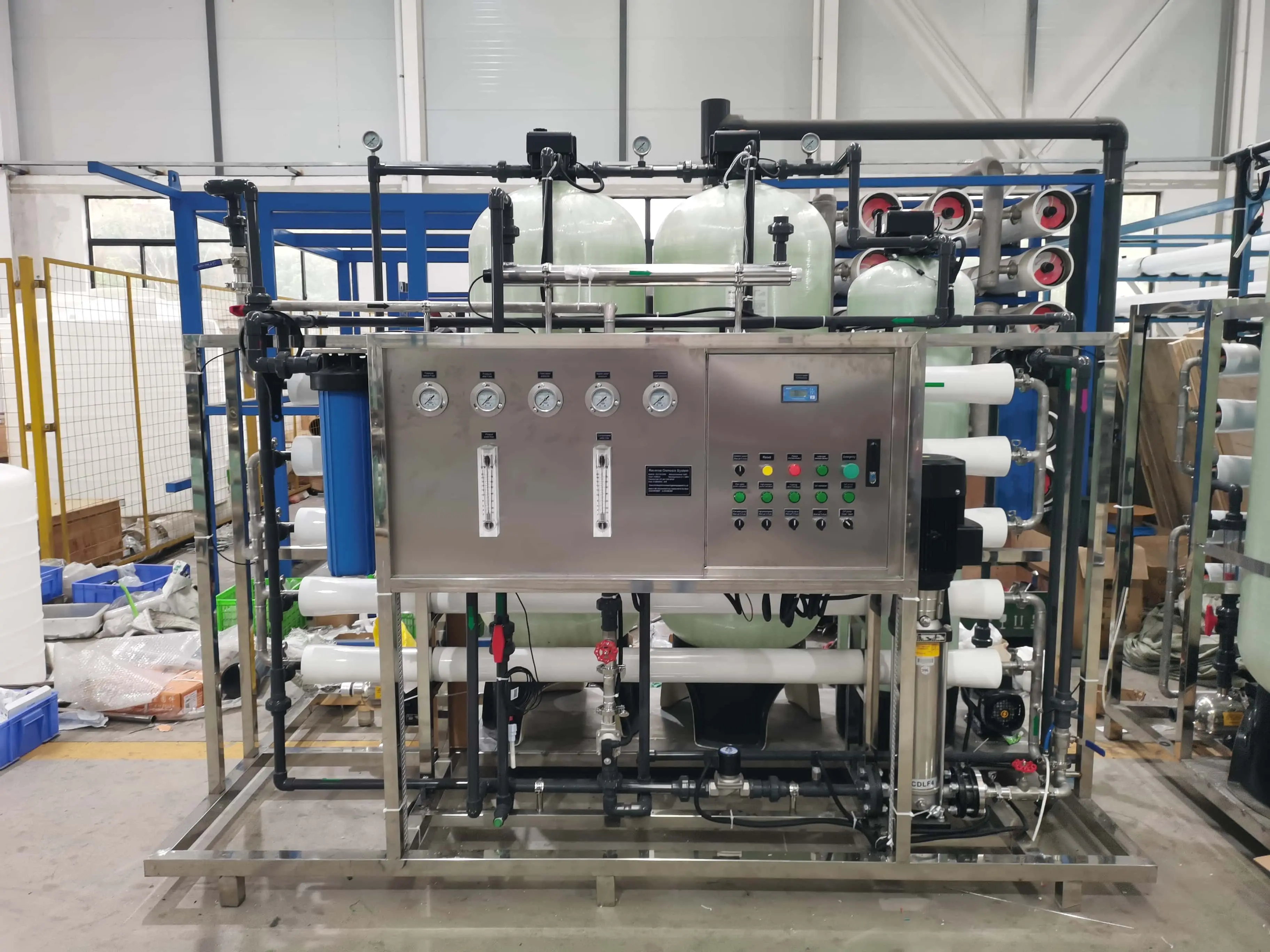
VII. Consumable Replacement Instructions: Since the consumables quartz sand, activated carbon, and softening resin are all granular, they easily form a porous structure when accumulated, creating an environment for the long-term growth of fungi. Furthermore, activated carbon and softening resin reach a certain adsorption saturation point, resulting in reduced filtration efficiency after long-term use. When flushing and regeneration no longer meet pretreatment requirements, they can be replaced to ensure the influent quality of the reverse osmosis membrane element.
If all conditions are met, the service life of quartz sand is 10-24 months, activated carbon is 10-12 months, resin is 10-12 months, fine filter cartridges are 3-6 months, and reverse osmosis membranes are approximately 12 months.
Resin Regeneration Cycle: Under normal conditions, the resin regeneration cycle is 1-3 days.
VIII. Application Areas:
1. Power Industry: Boiler feed water, cooling dams;
2. Electronics Industry: Ultrapure water for the semiconductor industry, integrated circuit cleaning water, and formulation water;
3. Food Industry: Formulation water, production water;
4. Pharmaceutical Industry: Process water, formulation water, washing water, water for injection, and sterile water preparation;
5. Beverage Industry: Formulation water, production water, and washing water;
6. Chemical Industry: Production water and wastewater treatment;
7. Drinking Water Engineering: Ultrapure water preparation and drinking water purification;
8. Petrochemical Industry: Oilfield injection water and deep treatment of petrochemical wastewater;
9. Seawater Desalination: Production and domestic water for islands, coastal water-scarce areas, ships, and offshore oil fields;
10. Environmental Protection: Recovery of precious metals and water from electroplating rinse water, achieving zero or minimal discharge.