








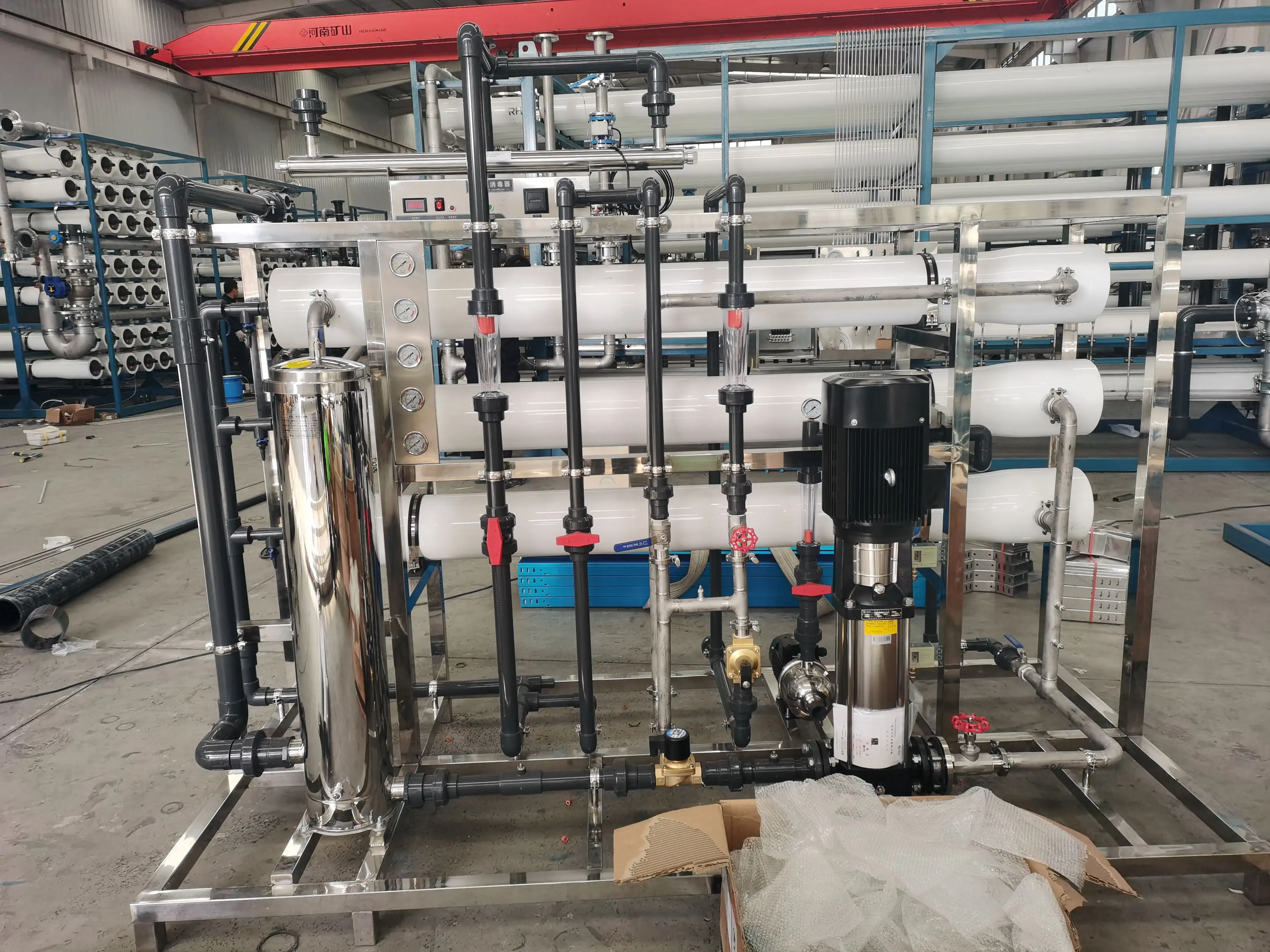
Why does EDI design require a flow rate range?
Unlike traditional ion exchange or Reverse Osmosis, EDI is an electrochemically driven continuous deionization process. Its core is to maintain a dynamic balance of hydraulic conditions within the dilute, concentrate, and cathode chambers. Flow rate is one of the key variables in this balance.
1. Product flow rate: Edi Modules have a rated design product flow rate range. The design must ensure that the average product flow rate during actual system operation falls within this range.
Excessive flow rates can lead to:
Insufficient contact time: Water residence time in the dilute chamber is too short, preventing ions from being driven by the electric field to migrate to the concentrate chamber, resulting in degraded product water quality (lower resistivity).
Insufficient membrane/resin boundary layer disturbance: The ion concentration polarization layer on the membrane and resin surfaces cannot be effectively flushed away, accelerating scaling and fouling.
Increased pressure drop: Increased pressure loss within the membrane stack, potentially exceeding the module's tolerances.
Too low a flow rate can lead to:
Localized overheating: Heat generated by the current cannot be carried away by sufficient water flow, potentially causing localized overheating within the module and damaging the ion exchange membrane or resin.
Exacerbated concentration polarization: Low water flow rates increase ion accumulation on the membrane/resin surface, promoting scaling (especially hardness and silica).
Polarization risk: At extremely low flow rates, the resin in the dilute water compartment may enter a polarized state due to lack of ion exchange, causing a sharp increase in resistance, resulting in a surge in module voltage or even damage.
Key requirement: Accurately match the rated flow range provided by the module supplier and consider the actual operating water temperature (flow compensation is required for low temperatures).
2. Brine flow rate: Carries ions migrating from the dilute water compartment, maintaining sufficient conductivity in the concentrate compartment to prevent scaling and gas evolution.
Minimum flow rate requirements are absolutely critical parameters, and sufficiently high flow rates must be maintained:
Preventing scaling: High flow rates (typically > 0.15 m/s or higher, depending on module design) effectively flush the baffles in the concentrate chamber, preventing ions (especially CaCO₃, CaSO₄, and SiO₂) from precipitating and scaling due to excessive concentrations. Scaling can clog flow paths, disrupt flow distribution, and ultimately lead to a sharp decline in module performance or even physical damage.
Maintaining conductivity: Sufficient flow dilutes migrating ions and prevents excessively low conductivity in the concentrate chamber. Excessively low conductivity increases the resistance of the concentrate chamber, resulting in excessive voltage drop across that region, potentially causing water electrolysis (generating H⁺ and OH⁻ gases), disrupting pH balance, and accelerating scaling and fouling.
Uniform flow distribution: The design of the concentrate circuit (piping and valves) must ensure that the concentrate flow rate of each parallel module is roughly consistent to prevent scaling in individual modules due to insufficient flow.
Brine Flow Control Methods:
Throttling Valve Regulation: The most common method. A constant brine flow rate is set and maintained by adjusting the opening of a valve in the brine pipeline (typically set at 5%-10% of the feed flow rate, but minimum flow rate requirements must be met).
Proportional Control: A more advanced method. The brine flow rate is adjusted proportionally to the feed flow rate (for example, maintaining brine flow rate = feed flow rate * a fixed percentage). This provides better adaptability to feed flow rate fluctuations.
Key Requirements: The minimum brine flow rate and minimum flow rate requirements specified by the module supplier must be strictly met, and reliable flow control devices (flow meter + regulating valve) and a uniform distribution design must be employed.
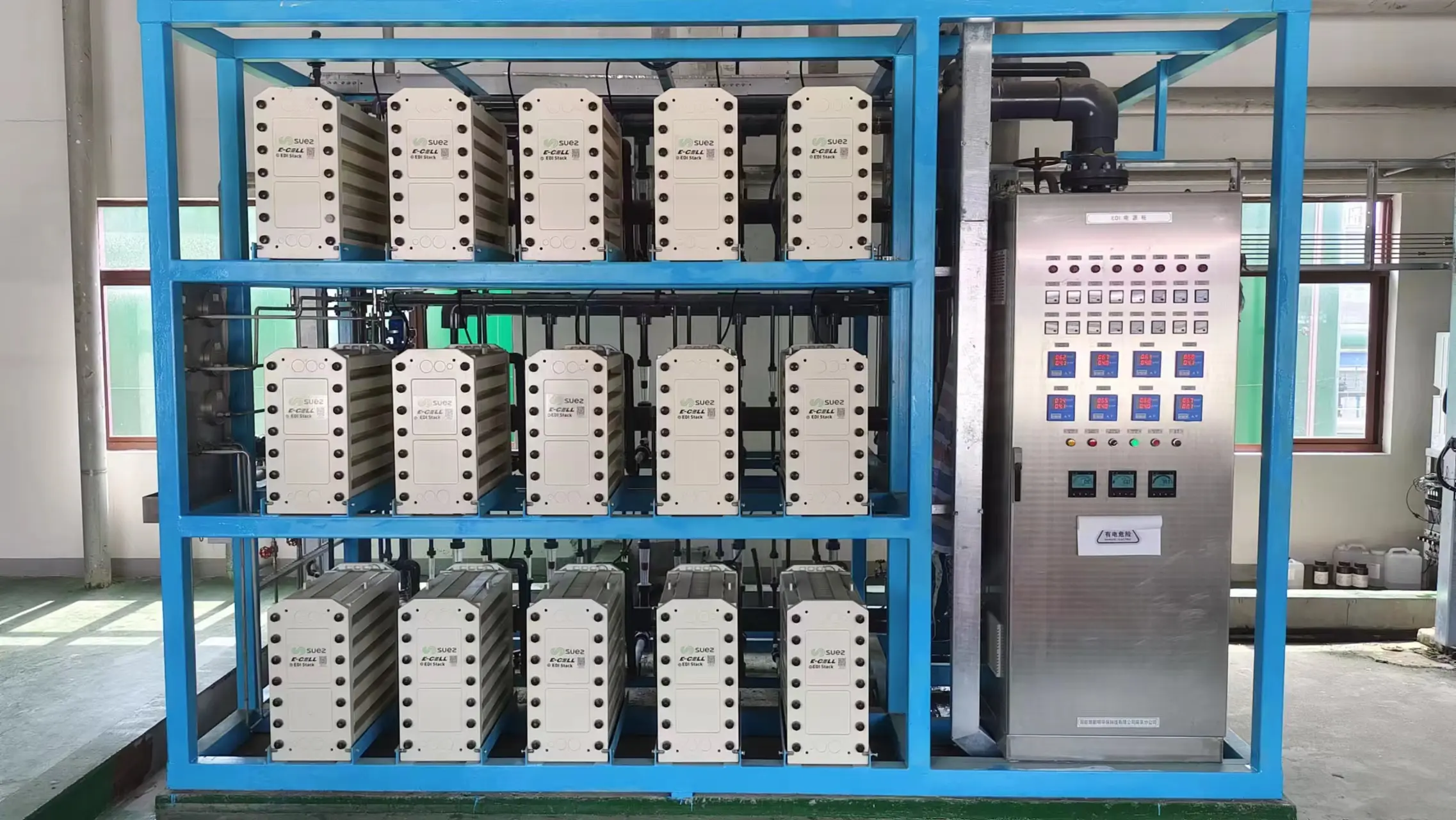
3. Electrode Water Flow: Cools the electrode plates and removes gases (H₂ and O₂ or Cl₂) and minor reaction products (acids/bases) generated by the electrode reaction, preventing gas accumulation and electrode corrosion/scaling.
Minimum Flow Rate Function:
Heat Dissipation: Sufficient flow rate is required to remove Joule heat and reaction heat generated by the electrode reaction to prevent localized boiling in the electrode chamber or excessive temperatures that could damage the electrode plates or seals.
Gas Carryover: A sufficient flow rate (usually low, but continuous) is required to continuously discharge generated gases from the system to prevent gas accumulation from obstructing water flow or forming a vapor lock, which could even create an explosion risk (H₂).
Electrochemical Product Dilution: Dilutes the acid (anode) or base (cathode) produced by the electrode reaction to prevent localized pH extremes from corroding the electrodes or piping.
Key Requirements: Meet the minimum water flow requirements specified by the module supplier and ensure continuous, stable flow. Typically, a low flow rate (e.g., 1-3 GPM/module) with continuous discharge or a combination of circulation and periodic discharge is employed.
4. Influent Flow: EDI requires an extremely stable influent flow rate. Severe flow fluctuations (e.g., caused by starting and stopping the RO product pump, rapid valve opening and closing, or sudden system load changes) can cause:
Water Hammer: Pressure surges can damage delicate components within the EDI module (membrane, screens, seals).
Hydraulic Maldistribution: Instantaneous flow fluctuations can disrupt the hydraulic balance within the module, resulting in localized excessively high or low flow rates, which can induce scaling or polarization.
Current/Voltage Fluctuation: Flow rate fluctuations directly affect module resistance, causing fluctuations in the rectifier's output current/voltage, impacting desalination efficiency and stability.
Design Countermeasures:
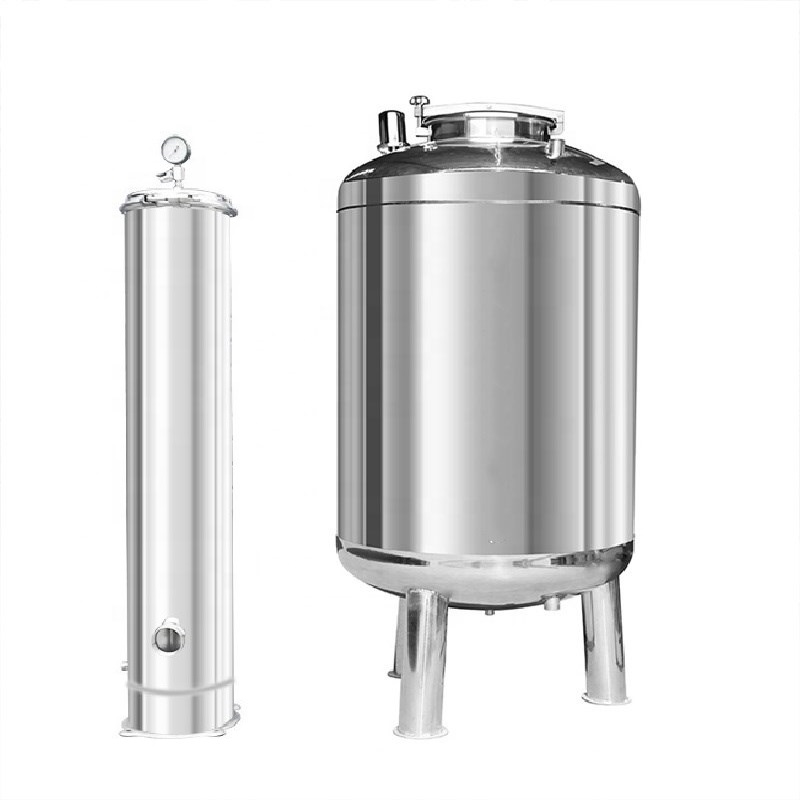
Buffer Water Tank: A buffer water tank of sufficient capacity should be installed between the RO product water and the EDI feed water pump. This is the most common and effective method for stabilizing flow. The tank acts as a flow damper and storage device.
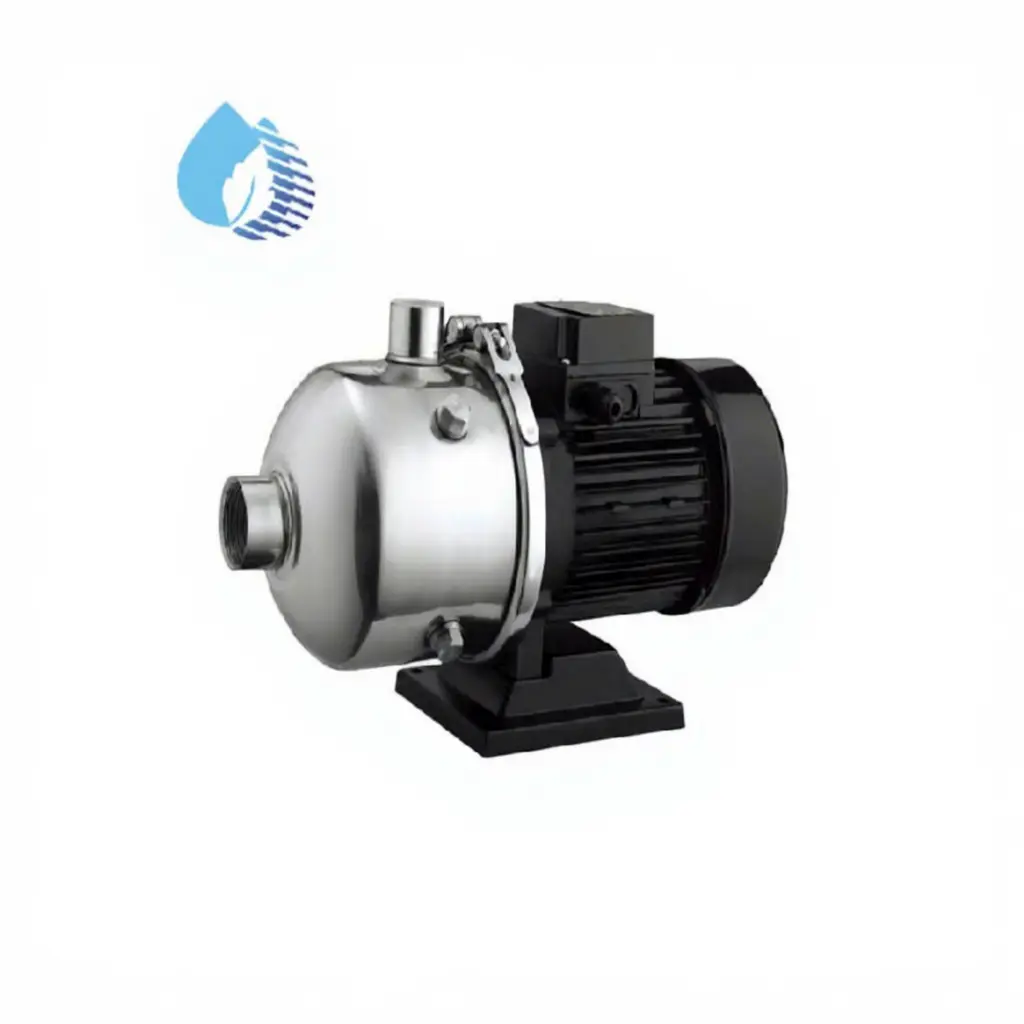
Variable Frequency Feed Water Pump: The EDI feed water pump should use variable frequency control to smoothly adjust flow rate based on product water demand or the buffer water tank level to avoid start-stop shock.
Flow Meter + Control Valve: A flow meter and control valve (or a variable frequency pump for precise control) should be installed at the EDI system inlet to ensure that the total flow rate entering the module remains stable at the designed value.
Slow Opening and Closing Valves: All valves in the system that may cause sudden flow rate fluctuations (especially brine discharge valves and flushing valves) should be slow-opening and slow-closing valves (such as needle valves or control valves with positioners), or their opening and closing speeds should be programmable.
Key Requirement: Eliminating flow rate fluctuations is paramount. A buffer water tank and variable frequency pump are a perfect combination. The flow rate change rate should be controlled within the range allowed by the module supplier (usually required to be very slow).