







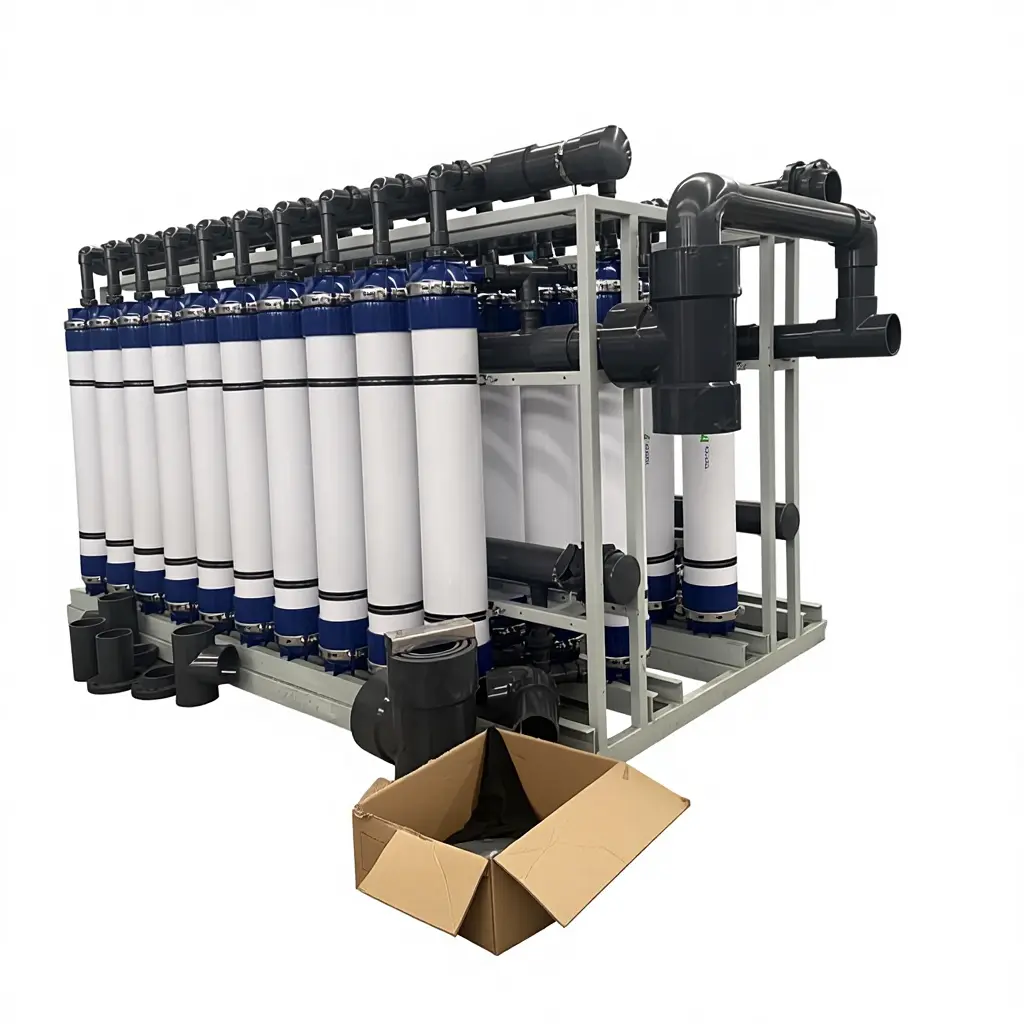
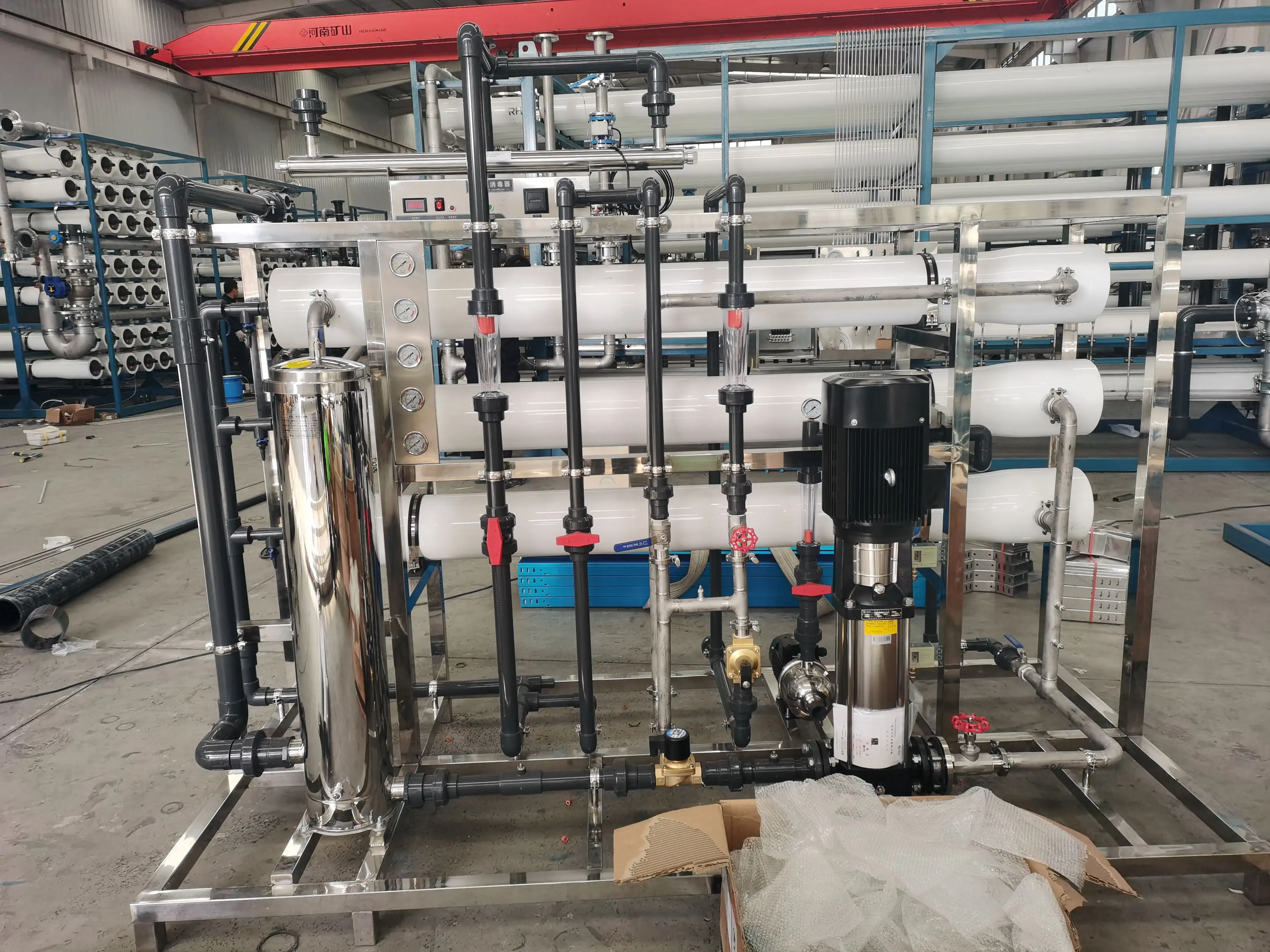
What common instruments are required for reverse osmosis operation?
This is a list of essential instruments for Reverse Osmosis system operation. These instruments serve as the "eyes" and "ears" for ensuring safe, stable, and efficient system operation and meeting water quality standards:
Residual chlorine monitor: Continuously monitors the concentration of residual chlorine (such as Sodium Hypochlorite) or other oxidants (such as ozone and hydrogen peroxide) in the influent water.
RO membranes (especially polyamide composite membranes) are extremely sensitive to oxidants, and even extremely low concentrations (>0.1 ppm) can cause irreversible oxidative damage. This instrument triggers an alarm and activates the dosing system for reducing agents (such as sodium bisulfite), which is a vital factor in protecting the membrane elements. Residual chlorine meters are relatively expensive and are often installed in large projects.
pH meter: Monitors the influent pH. pH affects the scaling potential of certain types of scale (such as calcium carbonate), the effectiveness range of certain antiscalants, and the system's salt rejection rate (salt rejection may slightly change when the pH deviates from neutral). This meter is particularly important when acid addition is required for anti-scaling or in specific applications.
ORP (Oxidation-Reduction Potential) meter: This indirectly reflects the redox state of the water. It is often used to verify adequate reducing agent dosage and ensure effective neutralization of residual chlorine. A low ORP value (typically <150mV) indicates a reducing environment, which helps protect the membrane from oxidation.
Production flow meter: This continuously monitors system water production. This is combined with the brine yield to calculate real-time recovery. A decrease in production flow is the most direct indicator of membrane degradation (fouling, scaling, damage) or changes in operating conditions (temperature, pressure). A temperature-compensated flow meter is typically required because production flow is significantly affected by water temperature (percentage of production changes by approximately 2-3% for every 1°C change in temperature). Comparable production flow must be compensated to a standard temperature (e.g., 25°C).
Brine flow meter: This continuously monitors brine discharge flow. This, along with the production flow, is used to accurately calculate the system's real-time recovery (production flow/(production flow + brine yield) * 100%). Excessively high recovery rates accelerate scaling and fouling, while excessively low rates waste water and energy. The brine flow rate is also an important indicator for determining the appropriate brine valve opening.
Production water conductivity meter: Continuously monitors product water conductivity online, directly reflecting the desalination efficiency of the RO system. Abnormally high conductivity values (decreased desalination rate) are important warning signs of membrane damage, seal leaks, scaling, fouling, or changes in influent water quality. This meter is typically installed on the main production water pipe, but can also be installed on each section of the production water pipe to locate problem sections.
Influent water conductivity meter: Monitors changes in influent salinity and, combined with product water conductivity, more accurately calculates real-time desalination.
Temperature sensor: Continuously monitors influent temperature. As mentioned earlier, temperature significantly affects product water yield and is a key parameter for flow compensation and normalization calculations. It also affects viscosity, salt diffusion rate, and other factors. This meter is typically installed upstream of the high-pressure pump.
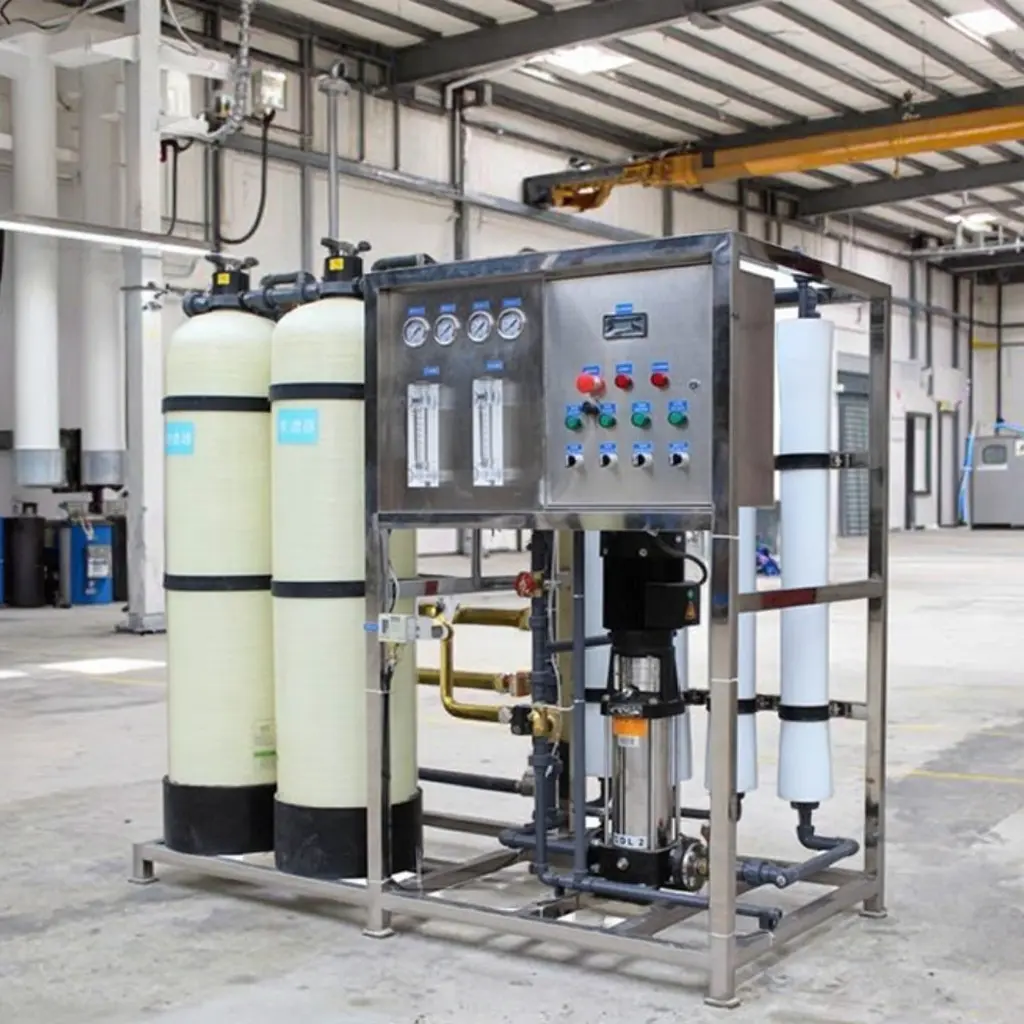
Pressure switch: A high-pressure protection switch is installed at the outlet of the high-pressure pump or on the influent pipe upstream of the membrane. When the pressure exceeds the safety set point, the pump is shut down immediately or the pressure relief valve is opened to prevent damage to the membrane housing, piping, or membrane elements due to overpressure.
Low-pressure switch: Installed at the high-pressure pump inlet. When the inlet pressure is too low (e.g., due to pretreatment blockage or water shortage), the pump is shut down to prevent cavitation.
Inlet pressure gauge: This indicates the inlet pressure of the first stage of the RO membrane stack. This is the most important driving pressure parameter for RO system operation.
Interstage pressure gauge: For multi-stage systems, this monitors the pressure at the first stage's brine outlet (i.e., the second stage's inlet). Calculating the first stage's pressure differential (inlet pressure - interstage pressure) is one of the most important indicators for determining fouling status of the first stage membranes.
Brine pressure gauge: Monitors the system's final brine discharge pressure. Calculating the system's or final stage's pressure differential (inlet pressure - brine pressure) is a key indicator for determining overall system or final stage fouling status. A sustained increase in the pressure differential is a key signal for cleaning.
Product water pressure gauge: Monitors the product water network pressure. Excessive back pressure in the produced water (e.g., due to a valve in the produced water pipeline being accidentally closed or excessive downstream pressure) can cause reverse pressure on the RO membrane, damaging the "telescope" of the membrane element. A high-pressure protection switch is usually required.