







Things to note when adding alkali to reverse osmosis to increase desalination rate
In primary Reverse Osmosis, alkali is used less to add alkali, and alkali is injected into reverse osmosis inlet water to increase pH. The only alkali agent used is sodium hydroxide (NaOH), which is easy to purchase and is easy to soluble in water.
Generally, industrial-grade sodium hydroxide that does not contain other additives can meet the needs. Commercial sodium hydroxide has 100% tablet alkali, 20% and 50% liquid alkali. When adding alkali to increase pH, you must pay attention to the increase in pH. Increased pH will increase LSI and reduce the solubility of calcium carbonate and iron and manganese.
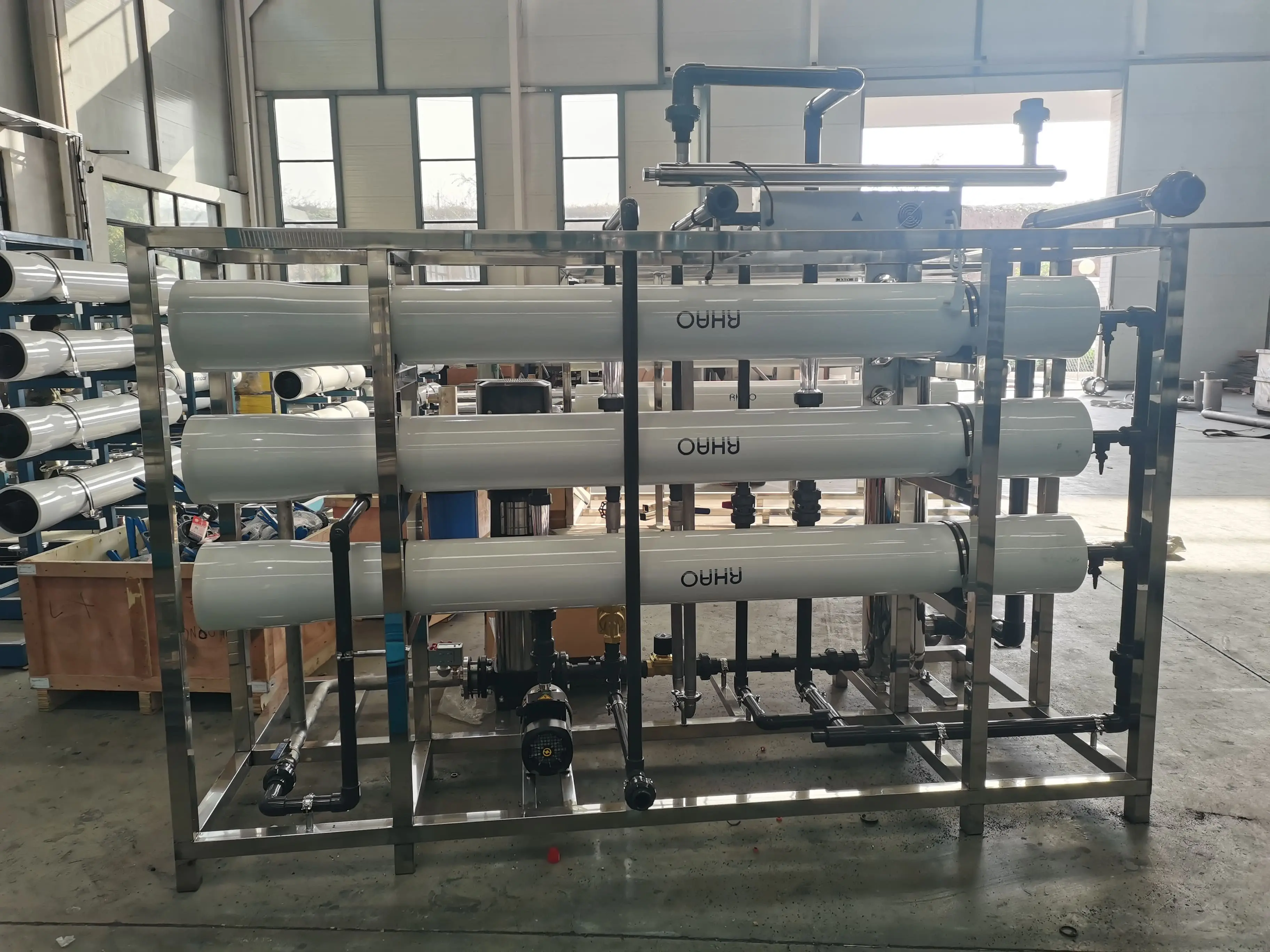
The most common alkali-adding application is the secondary Ro System. In the secondary reverse osmosis system, the primary RO produces water to supply the secondary RO as raw water. Secondary reverse osmosis "polish" the water production of first-level reverse osmosis, and the water quality of second-level RO water production can reach 4 megohms.

There are 4 reasons for adding alkali to the secondary RO inlet water:
a. At pH 8.2 or above, all carbon dioxide is converted into carbonate ions, which can be removed by reverse osmosis. Carbon dioxide itself is a gas that freely enters RO with the permeable liquid to produce water, causing improper load on the downstream ion exchange bed polishing treatment.
b. Certain TOC components are easier to remove at high pH.
c. The solubility and removal rate of silica are higher at high pH (especially higher than 9).
d. The removal rate of boron is also higher at high pH (especially above 9). There is a special case for alkali addition applications, commonly called the HERO (High Efficiency Reverse Osmosis System) process, adjusting the inlet pH to 9 or 10.
First-level reverse osmosis is used to treat bitter and salty water. Brutal and salty water will have pollution problems at high pH (such as hardness, alkalinity, iron, manganese, etc.). Pretreatment usually uses weakly acidic cationic resin systems and degassing devices to remove these contaminants.