







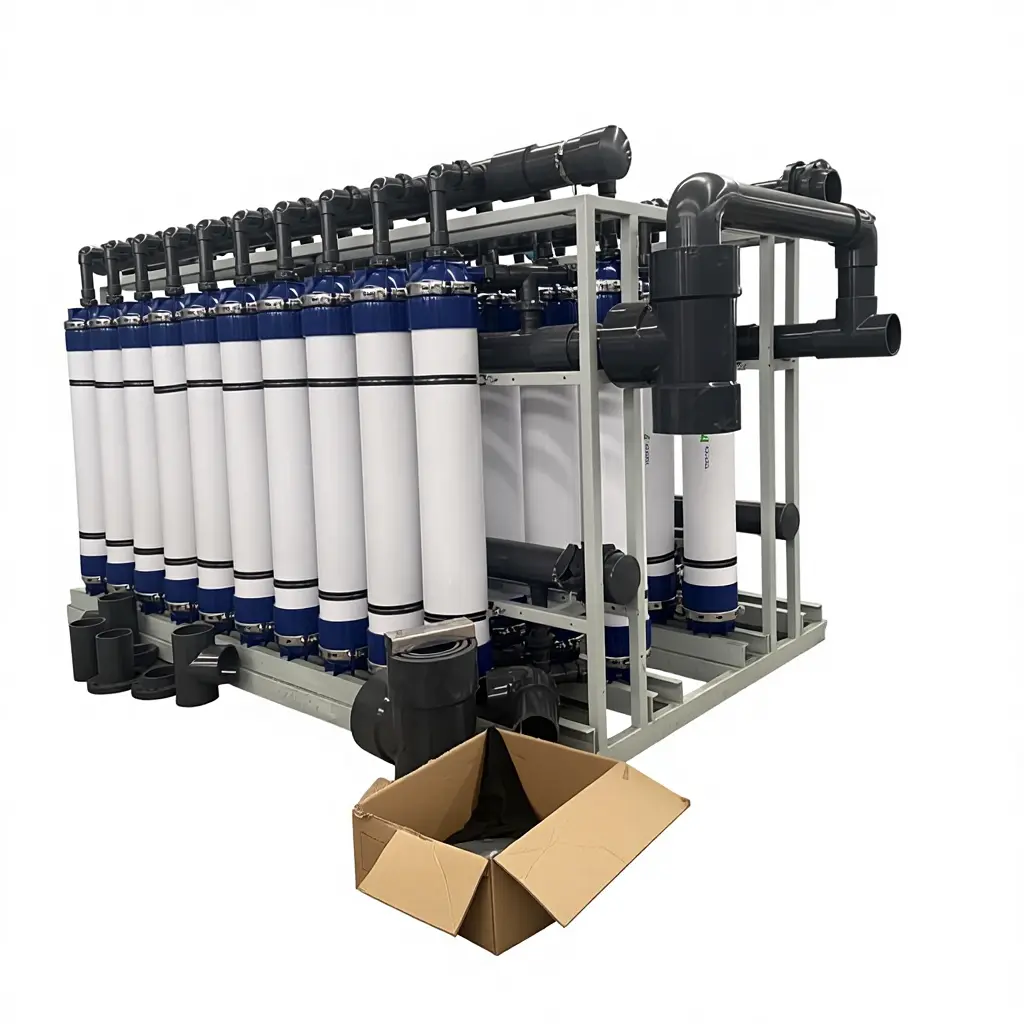
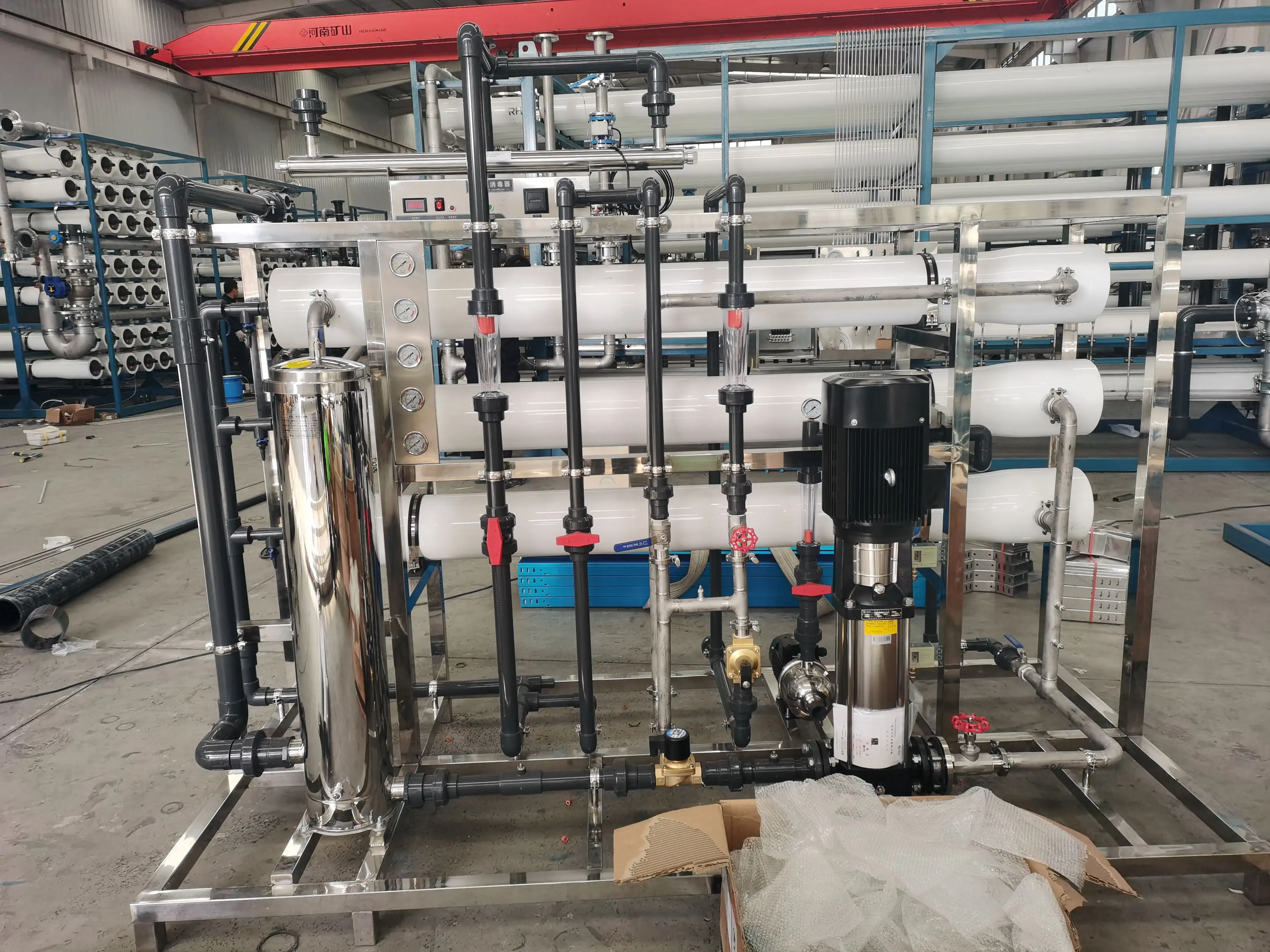
Several processes for pure water treatment (1)
Pure Water refers to pure water. Generally, it uses city tap water as the water source and passes through multiple layers of filtration to remove harmful substances such as microorganisms, but it also removes minerals such as fluorine, potassium, calcium, and magnesium that are needed by the human body.
I. Ozone sterilization ultrapure Water Treatment process
The disinfection principle of ozone (O3) is: the molecular structure of ozone is unstable at room temperature and pressure, and it quickly decomposes into oxygen (O2) and a single oxygen atom (O); the latter has strong activity and has a strong oxidizing effect on bacteria, killing them, and the excess oxygen atoms will recombine themselves into ordinary oxygen atoms (O2). There is no toxic residue, so it is called a pollution-free disinfectant. It not only has a strong killing ability for various bacteria (including hepatitis virus, Escherichia coli, Pseudomonas aeruginosa and miscellaneous bacteria, etc.), but is also very effective in killing mycobacteria.
A. The sterilization mechanism and process of ozone belong to the biochemical process, which oxidizes and decomposes the glucose oxidase necessary for the oxidation of glucose in bacteria.
B. Directly interact with bacteria and viruses, destroy their organelles and ribonucleic acid, decompose DNA, RNA, proteins, lipids and polysaccharides and other macromolecular polymers, and destroy the bacterial metabolic production and reproduction process.
C. Penetrate the cell membrane tissue, invade the cell membrane and act on the outer membrane lipoprotein and internal lipopolysaccharide, causing the cell to become permeable and deformed, leading to cell lysis and death. And dissolve and denature the genetic genes, parasitic bacteria, parasitic virus particles, bacteriophages, mycoplasmas and heat sources (bacterial virus metabolites, endotoxins) in the dead bacteria.
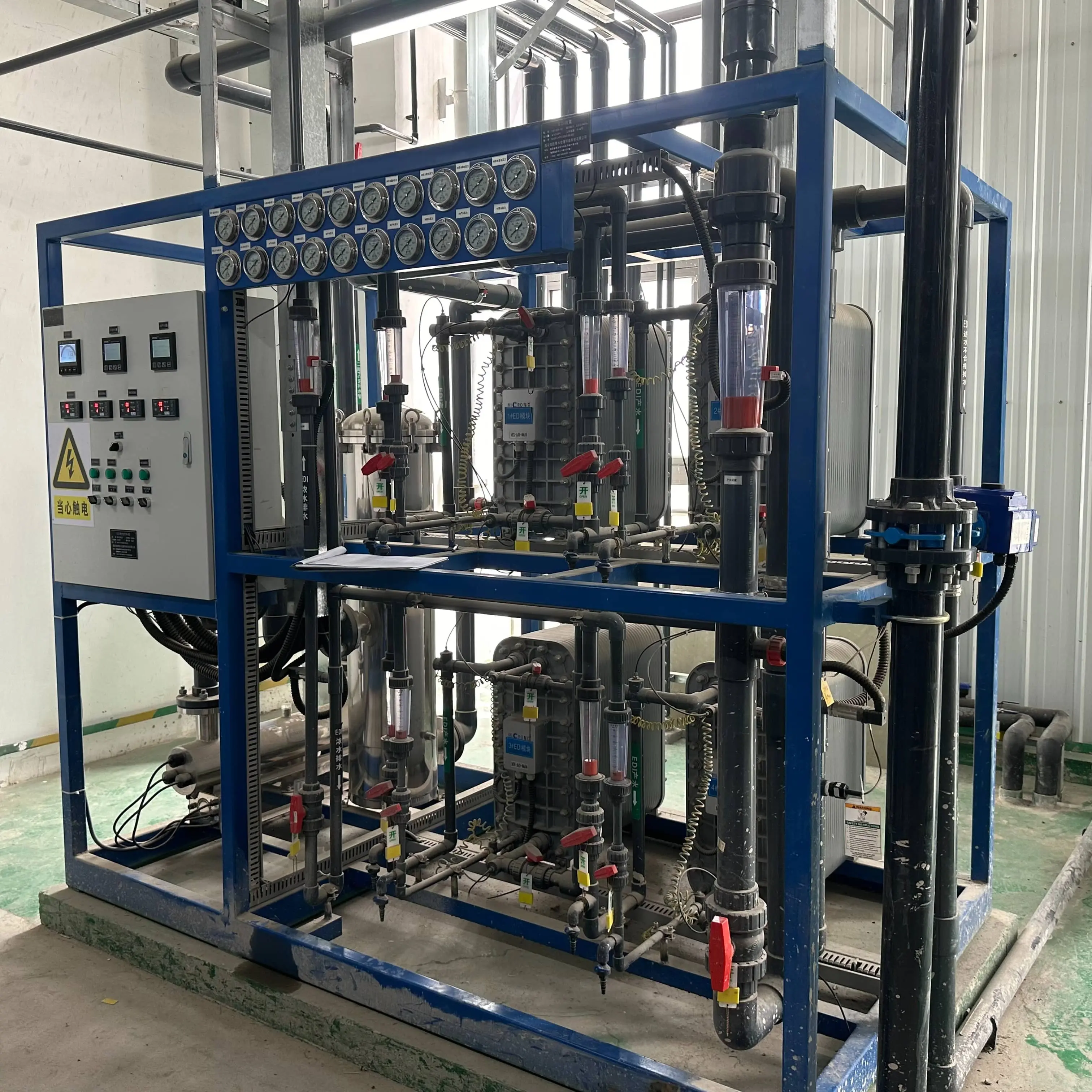
II. Activated carbon adsorption pure water treatment process
Activated carbon relies on adsorption and filtration to mainly remove organic impurities such as discoloration, odor, residual chlorine, and residual disinfectants in water.
III. Membrane microporous filtration treatment process
Membrane microporous filtration (MF) method includes three forms: deep filtration, mesh filtration, and surface filtration.
Deep filtration is a matrix made of woven fibers or compressed materials, which uses inertial adsorption or capture to retain particles, such as commonly used multi-media filtration or sand filtration; deep filtration is a more economical way to remove more than 98% of suspended solids while protecting the downstream purification unit from clogging, so it is usually used as a pretreatment.
Surface filtration is a multi-layer structure. When the solution passes through the filter membrane, particles with larger pores than the internal pores of the filter membrane will be retained and mainly accumulated on the surface of the filter membrane, such as the commonly used PP fiber filtration. Surface filtration can remove more than 99.9% of suspended solids, so it can also be used for pretreatment or clarification.
The mesh filter membrane is basically a consistent structure, just like a sieve, which keeps particles larger than the pore size on the surface (the pore measurement of this filter membrane is very accurate), such as the security filter used at the terminal of the ultrapure Water Machine; mesh filtration microfiltration is generally placed at the final use point in the purification system to remove the last residual trace resin pieces, carbon chips, colloids and microorganisms.