







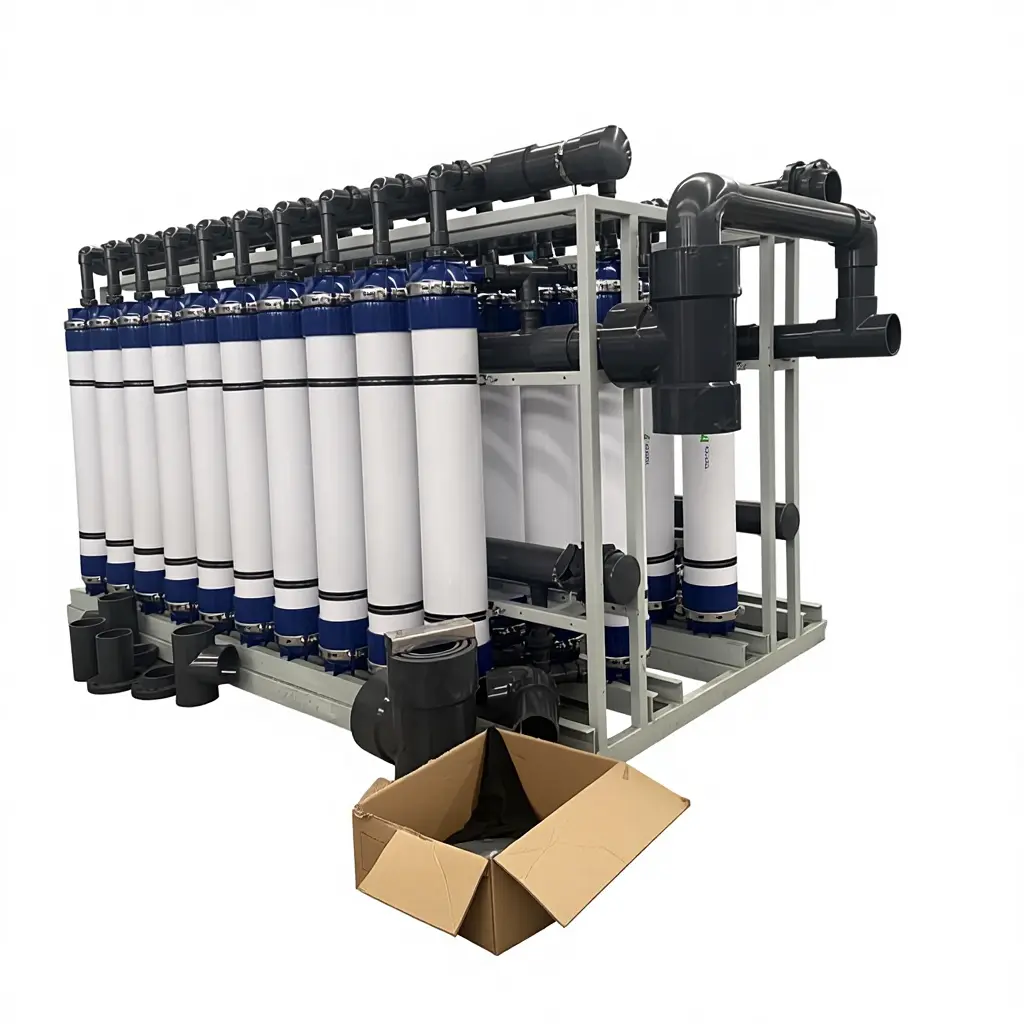
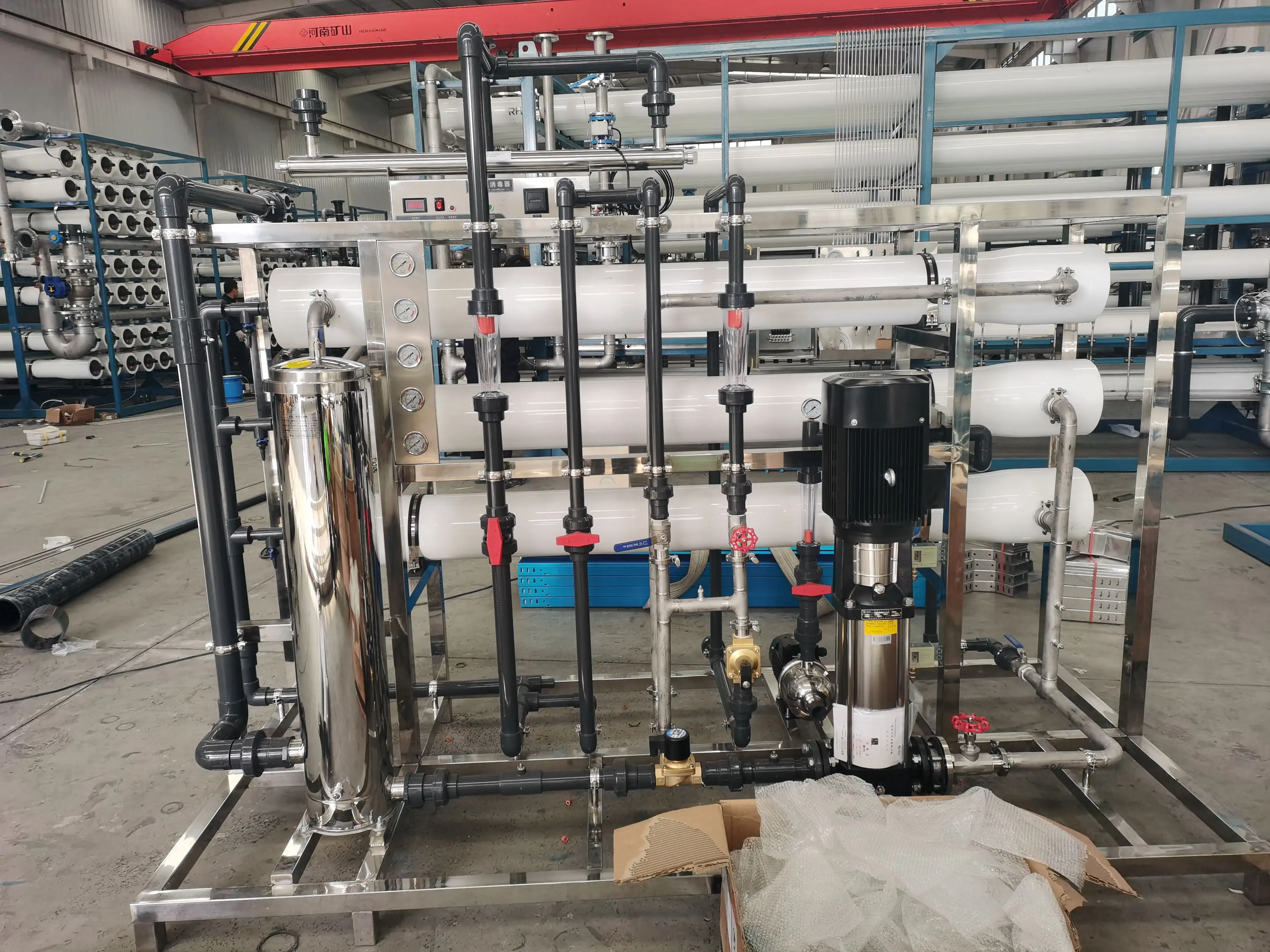
Industrial Pure Water Equipment Introduction
Pure water equipment is commonly known as reverse osmosis pure water equipment, reverse Osmosis Water purification equipment, reverse osmosis water equipment, water treatment reverse osmosis equipment, deionized water equipment, reverse osmosis pure water machine, etc.
The working principle of reverse osmosis pure water equipment: It uses a raw water pump to pressurize the raw water (the equipment's inlet water) in the tower and pass it through a pre-treatment quartz sand filter → activated carbon filter → Ro System security filter → RO membrane filtration system. The core component of the entire equipment is the RO reverse osmosis membrane of the RO system. It allows water molecules and ionic mineral elements to pass through the reverse osmosis membrane, while most inorganic salts (including heavy metals), organic matter, bacteria, viruses, etc., dissolved in the water cannot pass through the reverse osmosis membrane. This separates the permeated pure water from the concentrated water that cannot pass through. Under room temperature conditions, it uses a physical method without phase change to desalinate and remove salt from saline water. Ultra-thin composite membrane elements can achieve a desalination rate of over 95-99%. The pore size of the RO reverse osmosis membrane in pure water equipment is only 0.0001 micrometers, while the diameter of viruses is generally 0.02-0.4 micrometers, and the diameter of ordinary bacteria is 0.4-1 micrometer. This allows for the removal of colloids, organic matter, bacteria, viruses, etc., from water.
Working Principle:
Simply put, the reverse osmosis semi-permeable membrane has numerous pores, the size of which is comparable to the size of water molecules. Since bacteria, viruses, most organic pollutants, and hydrated ions are much larger than water molecules, they cannot pass through the reverse osmosis semi-permeable membrane and are thus separated from the water that does pass through. Among the many impurities in water, dissolved salts are the most difficult to remove. Therefore, the water purification effect of reverse osmosis is often determined by the desalination rate. The desalination rate of reverse osmosis mainly depends on the selectivity of the reverse osmosis semi-permeable membrane. High-selectivity reverse osmosis membrane elements can achieve a desalination rate as high as 99.7%.
Below, we will understand the functions of each component of the pure water equipment:
Raw Water Tower:
Primarily reduces mechanical failures caused by unstable raw water pressure during pump operation, ensuring a sufficient water supply and guaranteeing normal equipment operation.
Raw Water Pump:
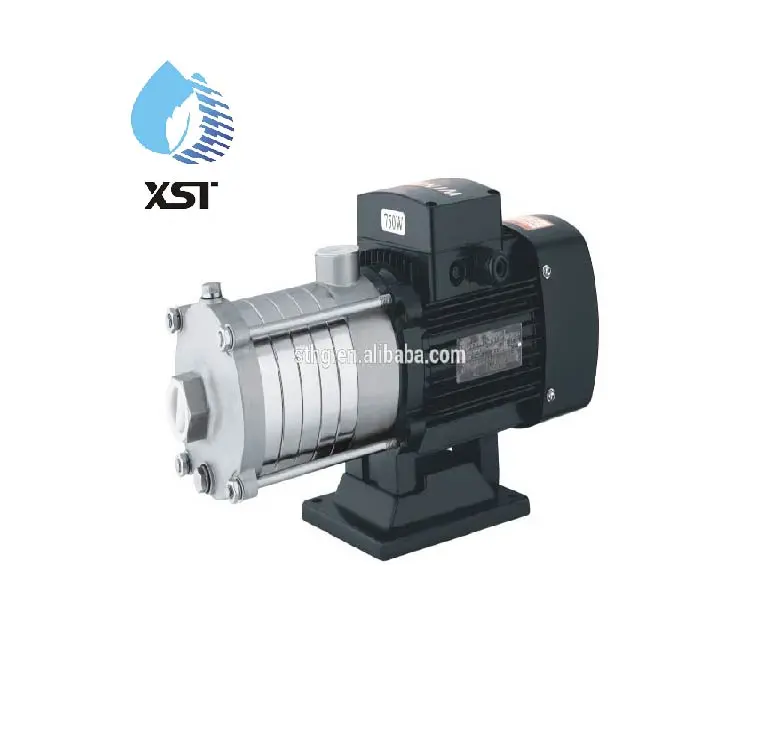
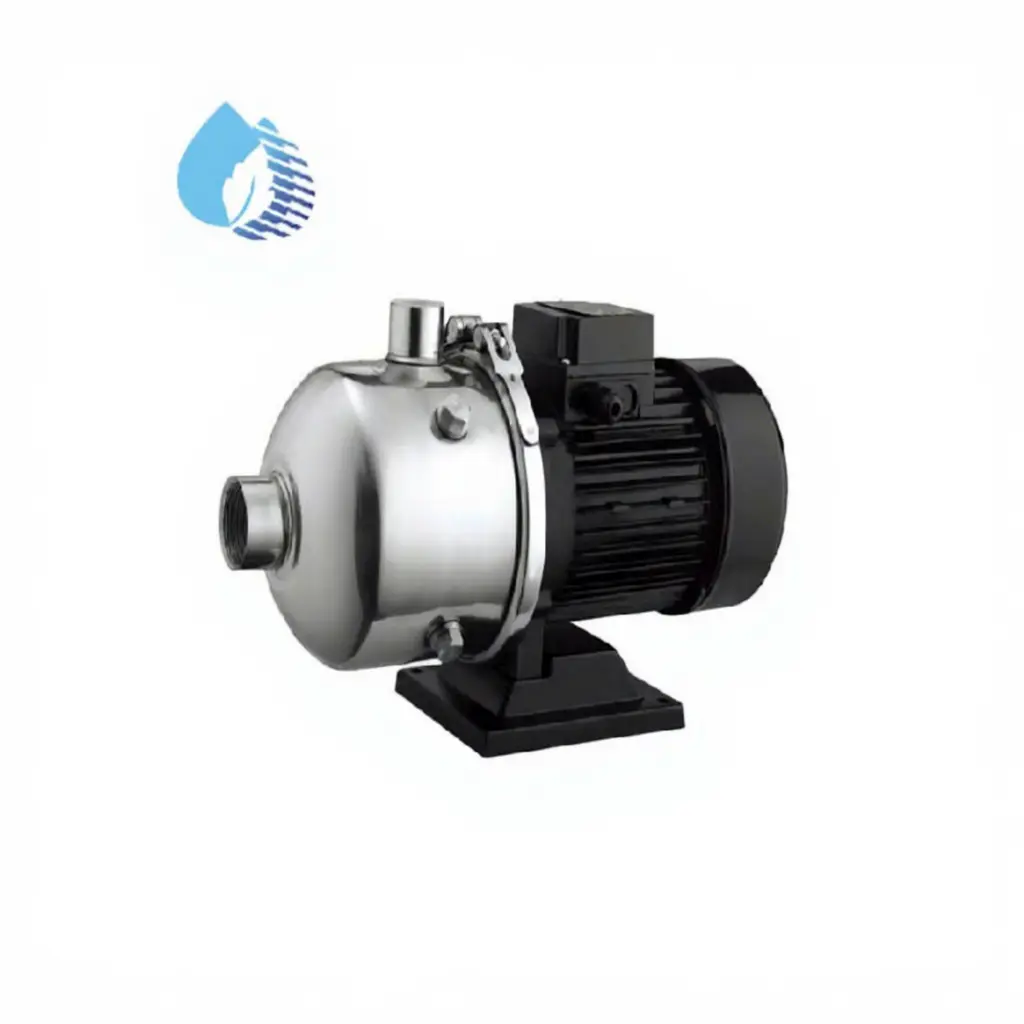
Provides pressurization for the sand filter, carbon filter, and fine filter in the pure water system. It ensures stable and sufficient inlet water pressure, acting as a pressure booster. It ensures that the pressurized water pressure exceeds the permeation resistance of the filters, allowing the pressurized water to efficiently pass through the pretreatment system, providing a sufficient water source for the RO system.
Quartz Sand Filter:
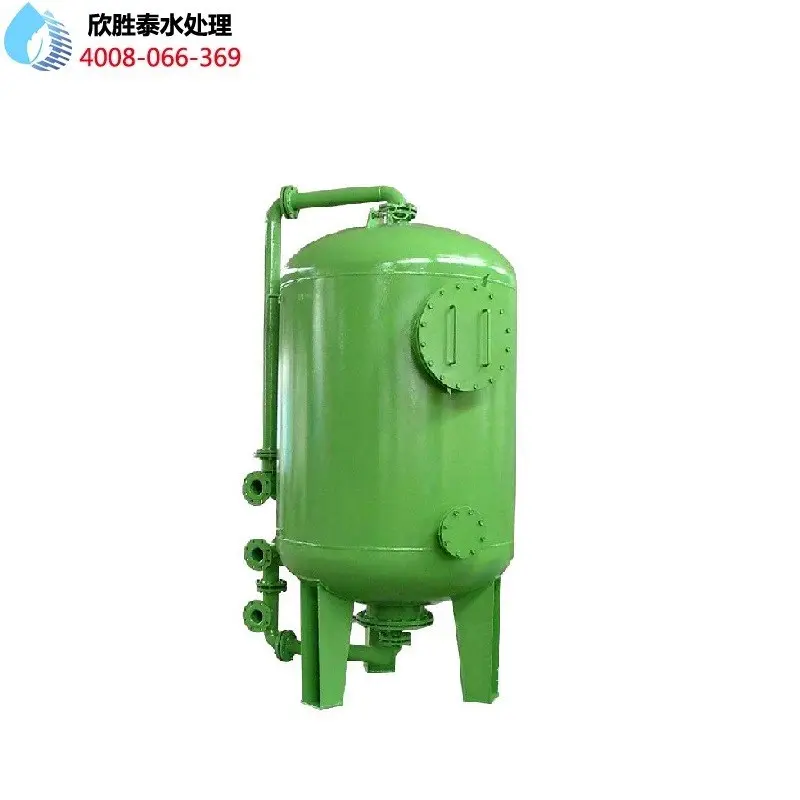
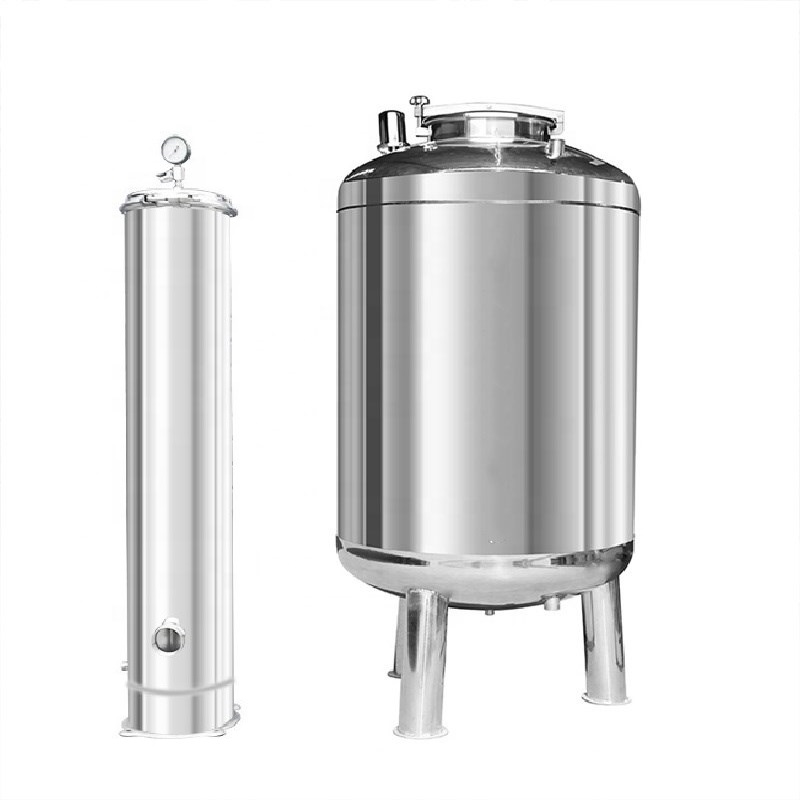
The quartz sand filter consists of a quartz sand tank (commonly made of fiberglass) filled with 4-8 mesh refined quartz sand. It effectively traps sediment, impurities, colloidal substances, suspended solids, etc., in the incoming water, purifying the water quality.
Activated Carbon Filter:
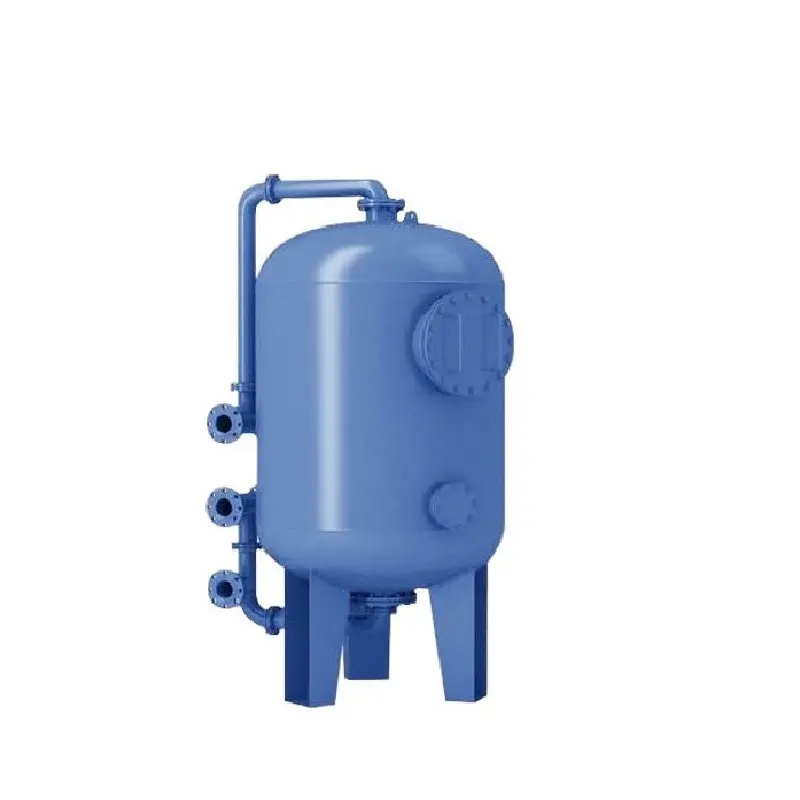
An activated carbon filter consists of an activated carbon tank (commonly made of fiberglass) filled with granular carbon specifically designed for water purification. It adsorbs pigments, odors, residual chlorine, and organic matter in the water, ensuring a residual chlorine content ≤1 PPM.
Security Filter:
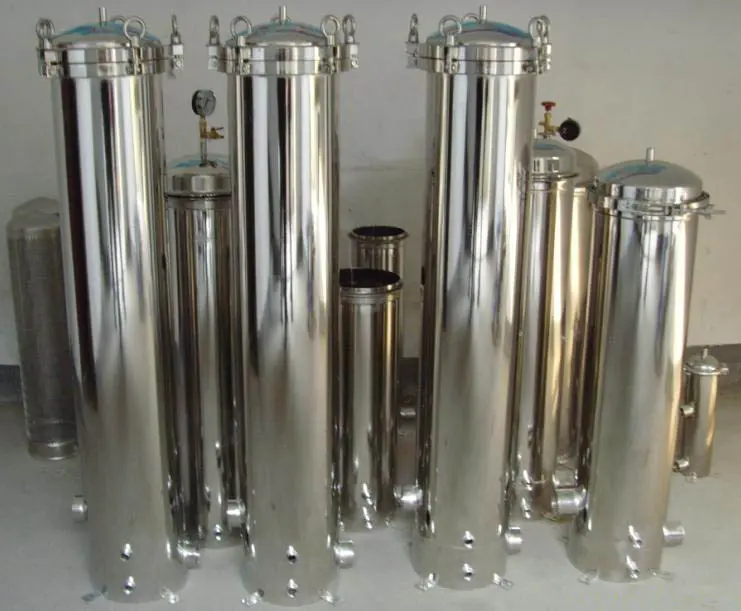
A security filter, also called a precision filter, is the final filtration system before the pre-treated water (sand filter, carbon filter) enters the reverse osmosis membrane. It contains a 5µm high-precision melt-blown filter cartridge, which removes particles larger than 5 microns, as well as oil mist, solid particles, and other impurities. PP cotton filters offer high flow rate, uniform structure, large dirt-holding capacity, low pressure loss, and stable efficiency.
RO Main Unit System:
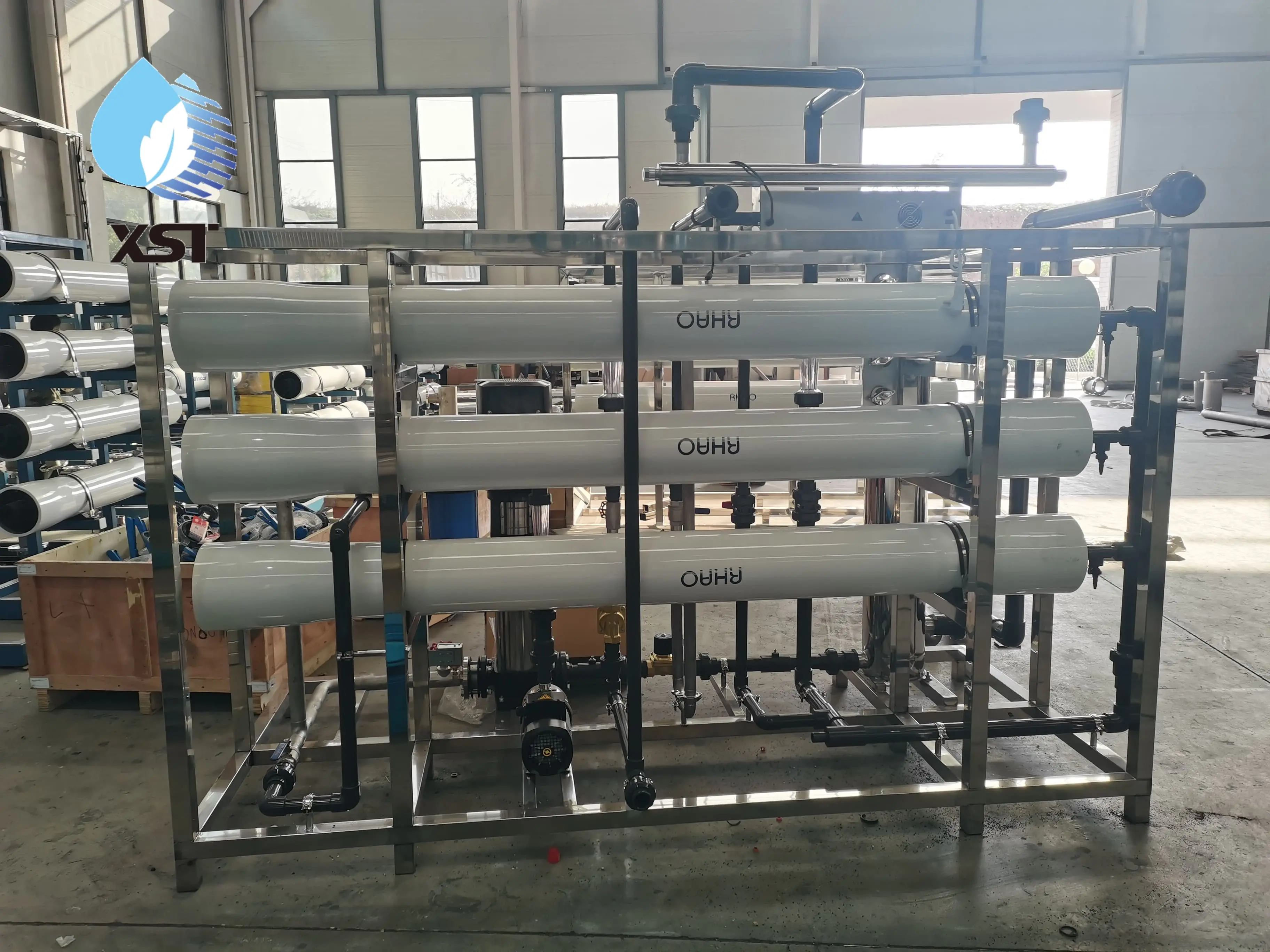
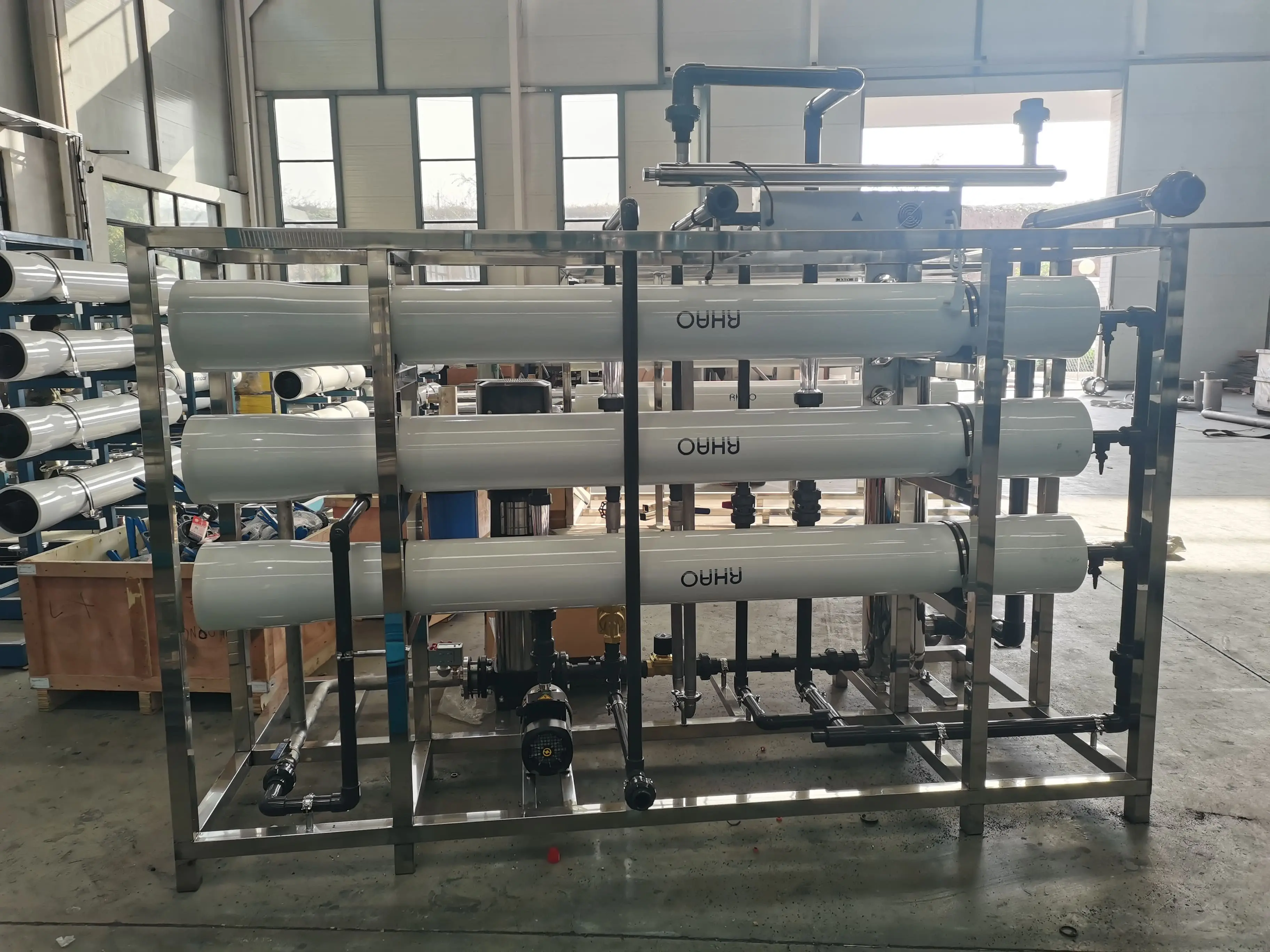
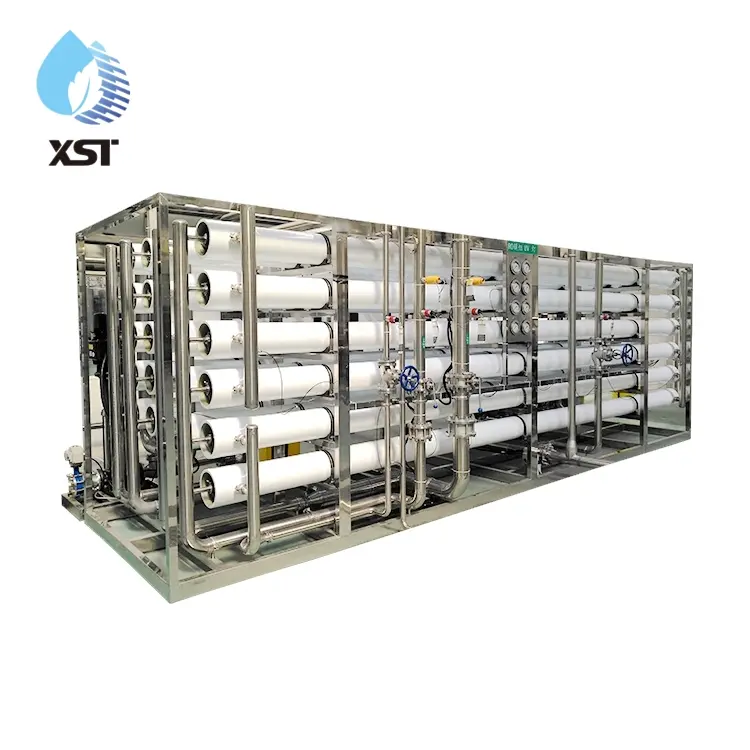
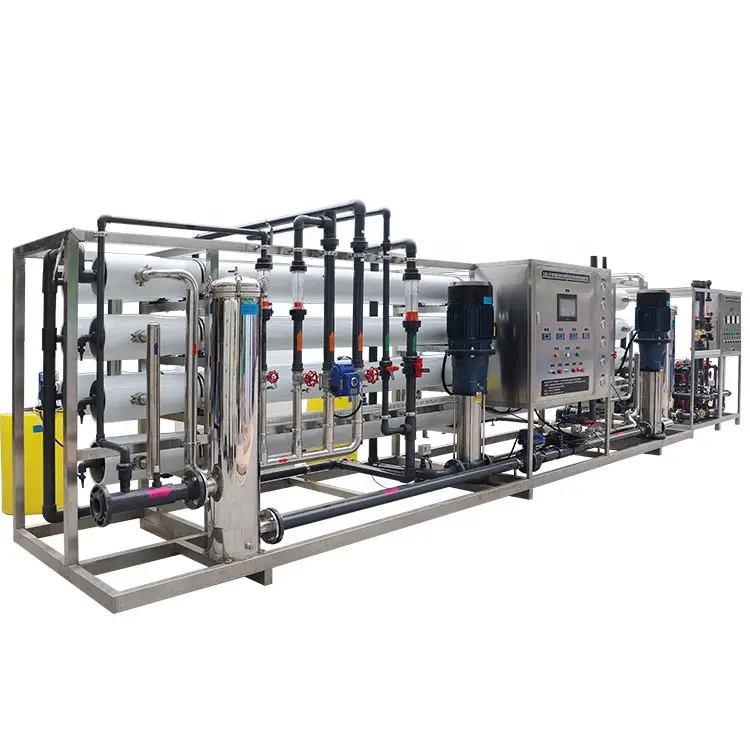
An RO main unit system consists of an RO membrane housing and an RO membrane. A high-pressure pump applies pressure greater than the osmotic pressure to the filtered water. Utilizing RO membrane separation technology, it effectively removes almost all types of suspended particles, silica gel, viruses, bacteria, and organic pollutants with a molecular weight greater than 200. It produces pure water with a conductivity ≤10μs (raw water quality ≤200PPM). The diameter of the micropores on the surface of the RO membrane is generally between 0.5 and 10nm, which can effectively retain substances larger than 0.0001 micrometers. It is the finest membrane separation product and has a highly efficient desalination effect with a desalination rate of over 98%.