







How to Decide Whether to Use a 4" or 8" Element for Reverse Osmosis?
In water treatment system design, the selection of Reverse Osmosis membrane elements directly impacts system efficiency and cost. Given the two mainstream sizes, 4-inch (4040) and 8-inch (8040), the decision is far more than a simple "size" decision; it requires a careful balance based on source water characteristics, system scale, and overall economics.
1. Source Water Characteristics
Source water quality is the primary factor in determining membrane element selection. It directly affects membrane flux (water yield per unit membrane area, measured in gfd) and the minimum water yield capacity of a single membrane element:
Surface water: Due to complex water quality, a lower average flux (8-14 gfd) is recommended. The minimum water yield of a single 8040 membrane is approximately 0.46 tons/hour (t/h). This means that if the system's designed water yield is significantly higher (e.g., several times higher), using an 8040 membrane is theoretically feasible.
Groundwater: Generally, the water quality is excellent, and the flux can be appropriately increased (14-18 gfd). The minimum water output of a single 8040 membrane increases to approximately 0.80 t/h.
Secondary RO feedwater (primary RO product): The water quality is optimal, and the flux is the highest (20-30 gfd). A single 8040 membrane can consistently produce approximately 1.15 t/h.
II. System Scale
The water source characteristics provide the baseline flux, while the total system design water output directly determines the suitability of the membrane element specifications:
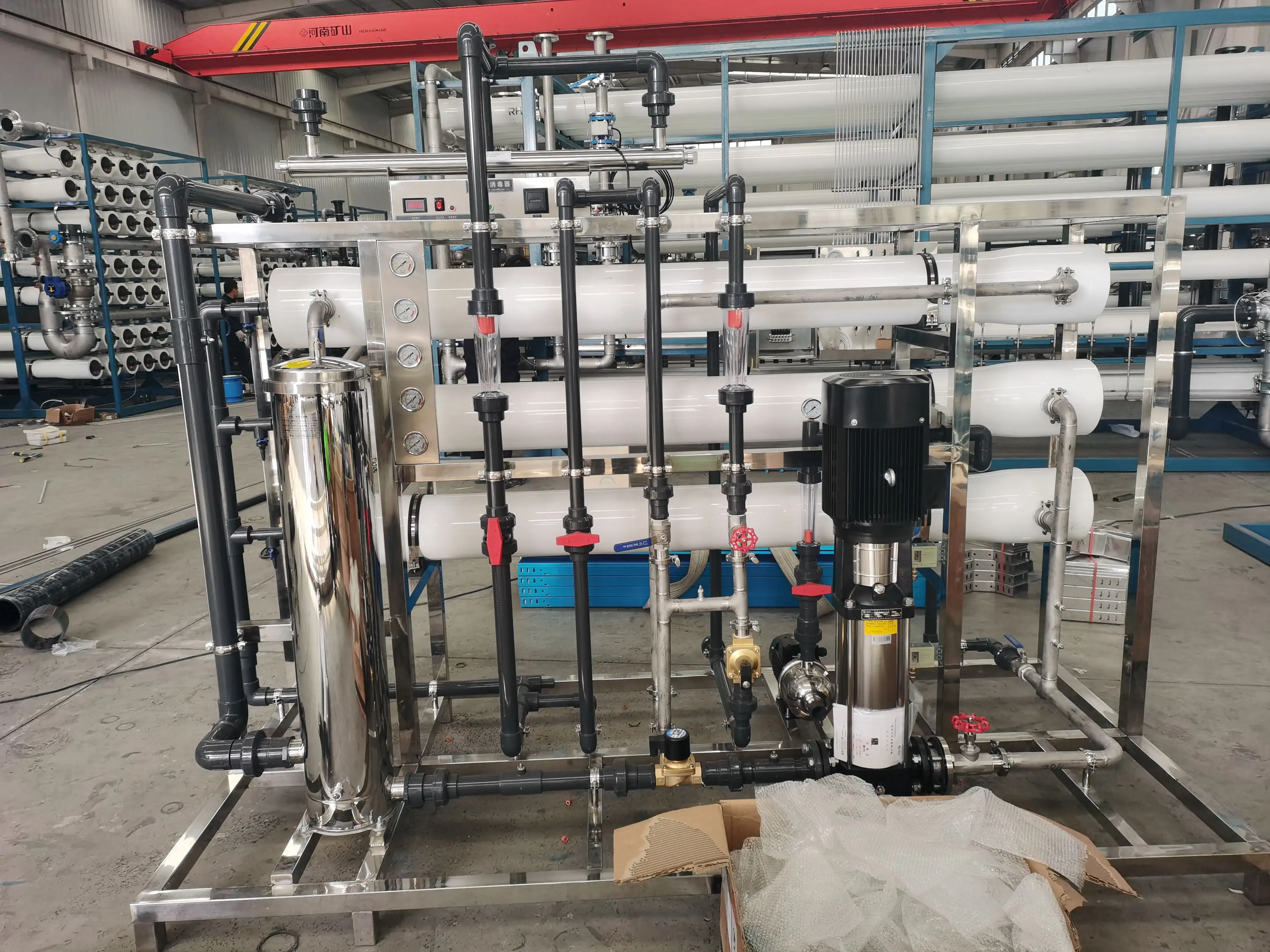
Below 3 t/h: At this scale, the total system water demand is relatively low. Using 4040 membrane elements allows demand to be met by increasing the number of membrane elements. This allows for more flexibility in matching system recovery requirements (especially when brine recirculation is required), avoiding resource waste caused by "a large horse pulling a small cart." The costs of supporting equipment such as Pressure Vessels, piping, and brackets are also lower, making the overall investment more economical.
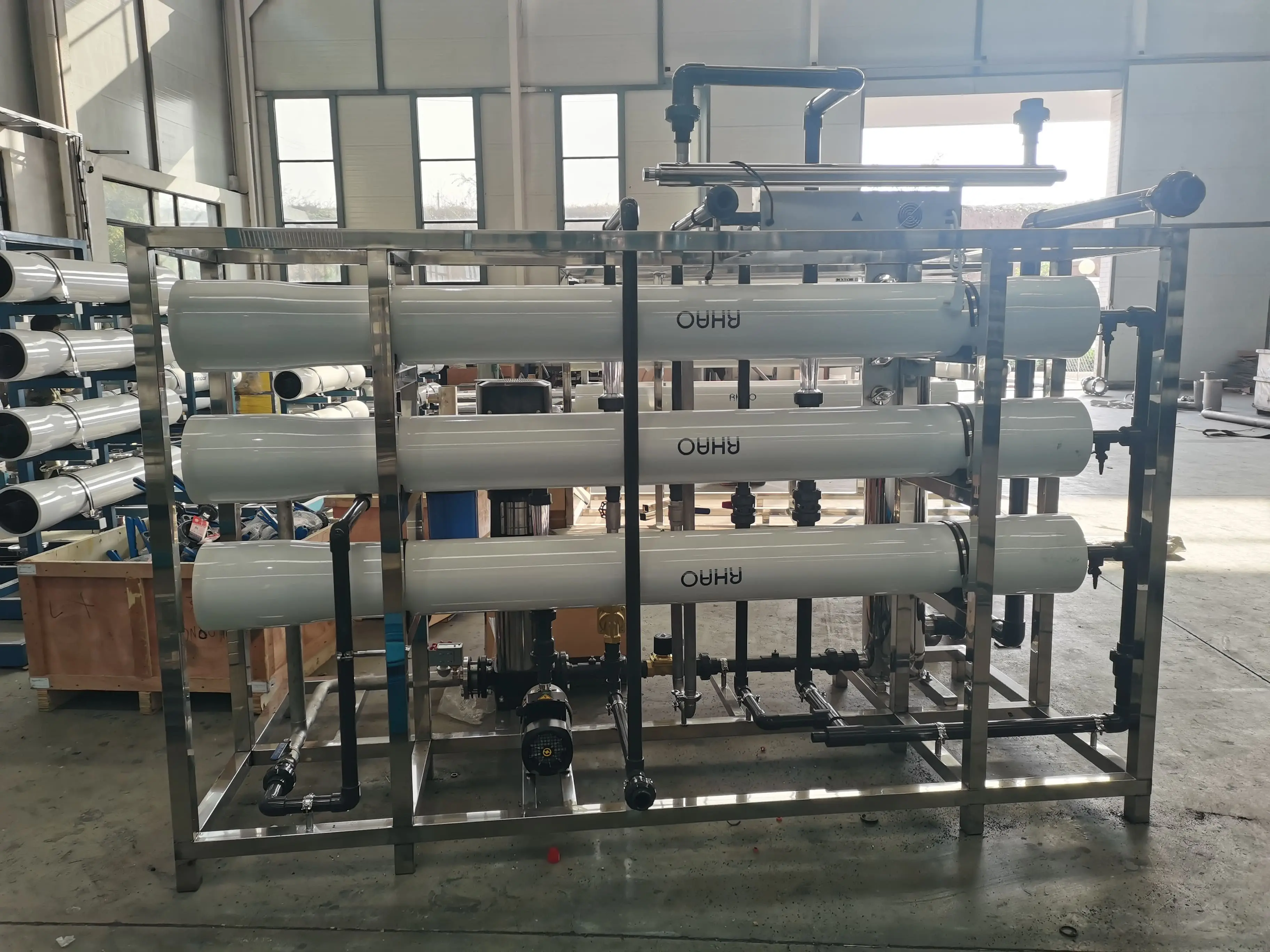
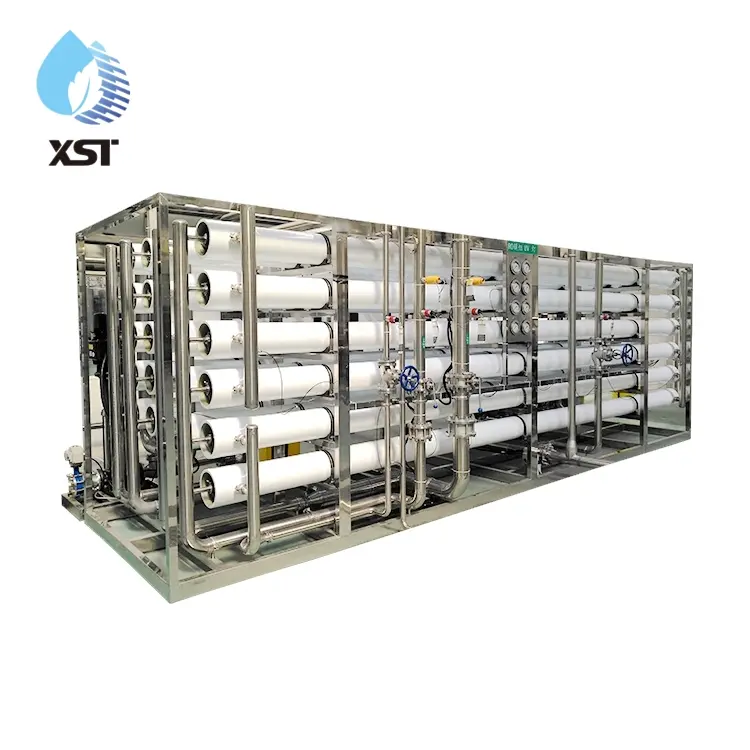
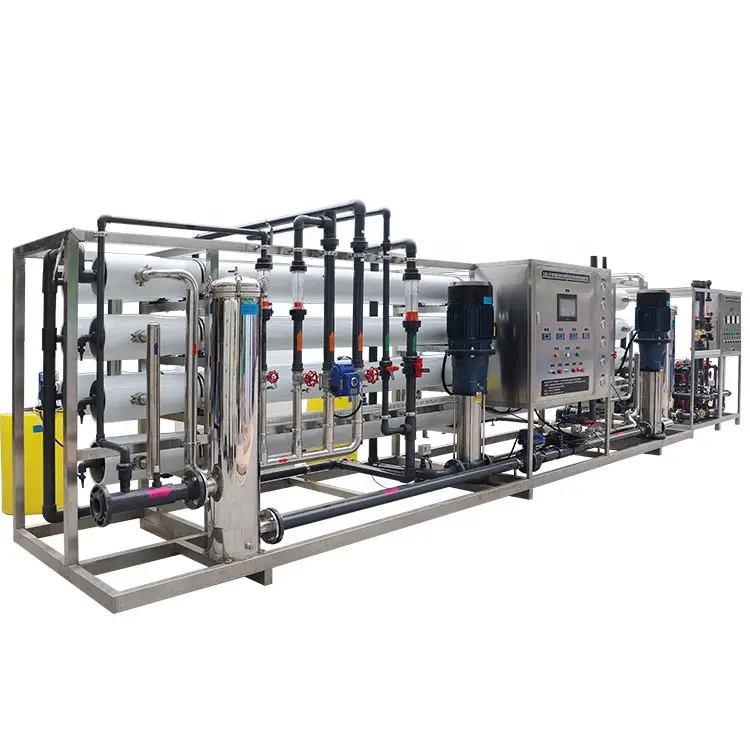
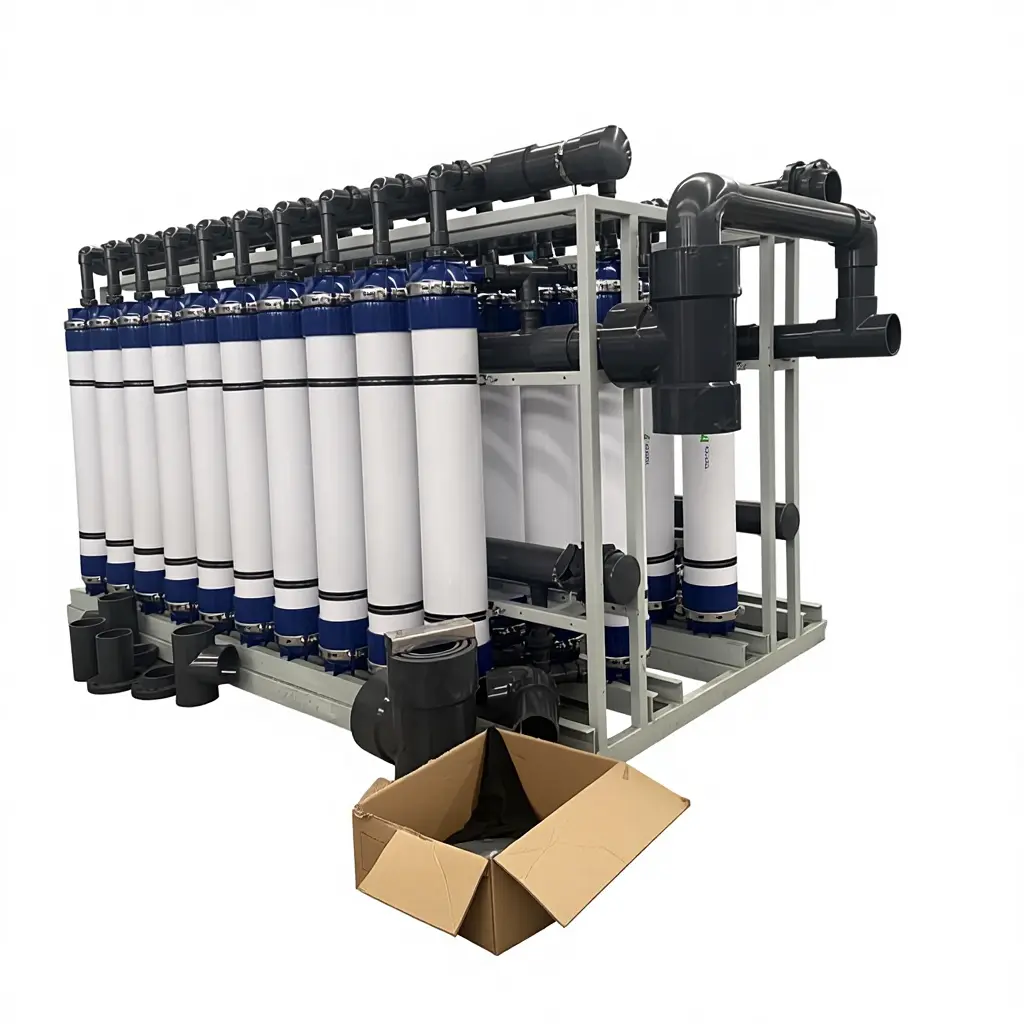
Above 5 t/h: The scale is significantly increased. If 4040 membranes are still used, the number of membranes required will increase dramatically (far exceeding the number of 8040 membranes), resulting in an extremely complex system structure, crisscrossing piping, and a significant increase in floor space. In this situation, the 8040 membrane, with its high per-unit capacity, can significantly reduce the number of membrane elements, simplify the system architecture, and save valuable space. Its comprehensive advantages (including ease of maintenance) are evident.
3-5 t/h: This range is a "gray area," where both specifications are technically feasible. The final decision requires in-depth analysis of the next level of key factors.
III. Deeper Factors
Once the initial capacity threshold is met, the following factors often become the decisive factor in the final decision:
System Recovery Rate and Brine Management: High recovery rates often require brine recirculation. Small systems (<3 t/h) using 4040 membranes are more achievable and offer flexible control. For systems in the 3-5 t/h range but with stringent recovery requirements and limited space, the 4040 solution may be a better option. Conversely, for moderate recovery rates, the 8040 solution can be met through a reasonable segmented design.
Space Constraints: Space constraints in factories or equipment rooms are a common challenge. 8040 membrane elements offer high production capacity per unit and require fewer pressure vessels, significantly reducing the system's footprint. This is crucial for space-constrained renovation projects or compact designs.
Investment and Long-Term Cost Efficiency: Comprehensive considerations are required:
Initial Investment: While the 4040 membrane element is low-priced per unit, it requires a large number of pressure vessels, valves, piping, and instrumentation, making the initial total investment potentially high, especially for medium- to large-scale systems.
Maintenance Costs: The 8040 membrane system offers a simplified structure and fewer membrane elements, reducing labor and chemical costs for daily cleaning and replacement. Fewer pipe connections also reduce the risk of leaks, resulting in generally better long-term operational and maintenance costs.
IV. Industry Experience and Recommendations
Based on extensive engineering experience, the industry has established the following general guidelines:
<3t/h: 4040 membrane elements are preferred. They offer flexible system construction, manageable initial investment, and are more easily adaptable to precise recovery rate control at low flow rates.
3-5 t/h: Flexible selection range, focusing on the following:
Is space extremely limited? (Yes → Prefer 8040)
Are recovery requirements extremely high and do you need brine recirculation? (Yes → Prefer 4040)
Is the project budget more focused on short-term investment or long-term O&M costs?
Are there clear plans for future capacity expansion? (Yes → Prefer 8040 to reserve space for future expansion)
>5 t/h: 8040 membrane elements are preferred. Their combined advantages of significantly reducing the number of membranes, simplifying the system, saving space, and lowering long-term O&M costs are undeniable, making them the most cost-effective solution.