







Common Sewage Pump Failures and Solutions
As the most fundamental component of all Sewage Treatment Plant equipment, the proper functioning of the pump directly impacts the plant's economic performance. Given the diverse types of sewage, such as industrial and domestic wastewater, and the varying composition of industrial wastewater, the pump requirements for each sewage treatment process also vary. However, the general goal is to achieve non-clogging, slow wear, a relatively long lifespan, corrosion resistance, energy conservation, environmental protection, and high efficiency.
Currently, pumps produced by domestic manufacturers still lag behind those produced by foreign manufacturers in terms of efficiency and lifespan. However, foreign pumps are expensive, have long lead times, high maintenance costs, and expensive and difficult-to-find spare parts, which restricts the stability of sewage treatment plant operations. In contrast, domestic pump technology is more mature.
Common Sewage Pump Failures and Solutions
Due to the diverse models, usage levels, and usage methods of pumps, failures and problems can also vary. The following summarizes common pump failures, their causes, and specific solutions.
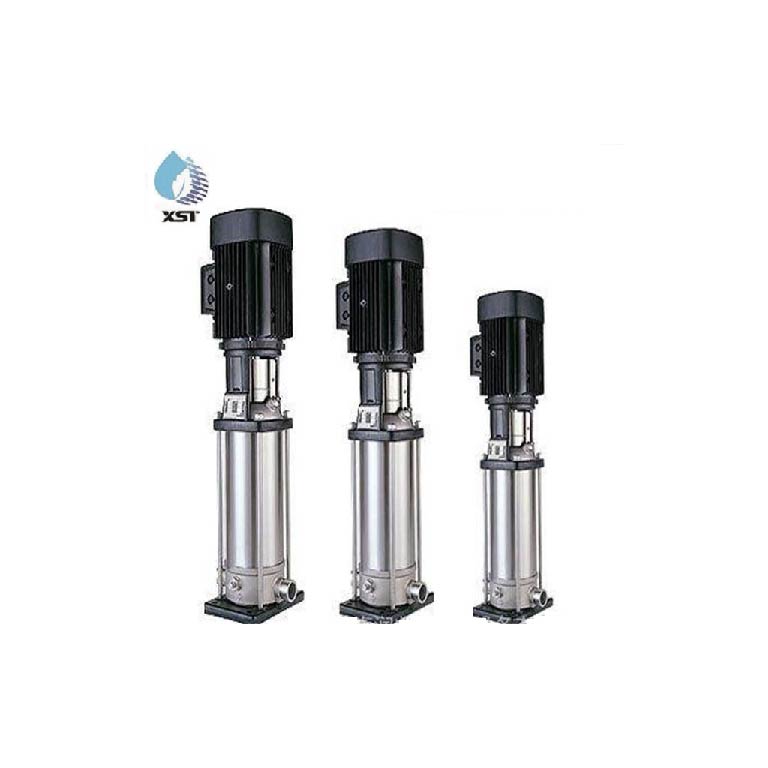
1) Failure to Start
Failure to start a pump may be due to either a power failure or a malfunction within the pump itself.
The specific troubleshooting steps are as follows:
First, check the power supply: whether the power connector is secure, the switch is tight, and the fuse is intact. If there are any problems, such as a short circuit, short circuit, or blown fuse, repair them immediately. If the power supply is not the problem, check the pump for any faults.
The following checks should be performed:
Is the packing too tight, causing debris to be trapped between the impeller and the pump body?
Is the pump shaft bent or rusted? If any of these problems are present, loosen the packing and clear the water inlet trough, or remove the pump shaft for alignment or replace it with a new one.
2) The pump is not pumping water or the flow rate is insufficient
If the pump is not pumping water or the flow rate is insufficient, it is likely due to a leak in the suction pipe or a leak in the bottom valve. However, there are several other possible causes:
The water inlet is blocked;
The bottom valve is not deep enough in the water;
The pump is running too fast;
The impeller is severely worn;
The water intake is not reaching or exceeding the specified height: It is also possible that the problem is not with the pump itself, but rather that the local water volume is too low.
The solution is as follows:
- Check the pump's current and voltage for any abnormalities. If the current is significantly lower, such as only half the normal value or slightly more, the impeller may be worn or the check valve may be clogged. If the current is not significantly different from normal, there may be a leak in the pipe gasket, pipe, or pump body. If the current is higher than normal, look for wear on vulnerable parts.
- Inspect the suction pipe and foot valve to identify any leak sources. Remove any blockages such as silt from the water inlet. Check the water depth of the foot valve and ensure it is at least twice the diameter of the inlet pipe. If not, increase the depth.
- Check the voltage to see if it's too low to start the pump. Or, if the power and speed are mismatched or the belt is slipping, causing the speed to be too low.
3) Motor Overheating
There are many reasons for motor overheating, including excessive power supply voltage, problems with the pump, or the motor itself.
The following are the solutions:
- Check the power supply voltage: If the voltage fluctuates significantly, it's due to voltage instability. Immediately stop using the motor to prevent more serious consequences. Alternatively, install appropriate heat dissipation protection measures on the motor.
- Check the water pump: The pump may not be compatible with the motor, causing the motor to overheat after prolonged operation. Alternatively, the motor may have been operating for longer periods of time than specified. In this case, strictly limit the operating time and frequency, select the correct thermal protection, and use it within the specified rating in the manual.
- Check the motor wiring: A wiring error may be causing the high temperature. If so, quickly reconnect the motor correctly.
- Check the ventilation system: Check for damage to the fan, proper rotation, and any obstructions in the ventilation holes.
- Check the motor windings: If the windings are damp or have dust, sand, or other debris attached to them, this may compromise the insulation and should be removed immediately.
- Check the surrounding environment: When the ambient temperature is above 35°C, the incoming air temperature will rise, causing the motor to overheat. Improve the working environment as much as possible, such as building a shade awning for shade.
4) Excessive power loss
The causes of power loss are as follows:
The screw is running too fast.
The pump shaft is bent, or the pump and motor shafts are not concentric or parallel.
The pump head is not suitable.
There is a blockage in the pump.
The motor ball bearings are damaged.
Solutions are as follows:
First, check the circuit voltage and reduce the pump speed.
Align the pump shaft and adjust the relative position of the pump and motor.
Select a pump with the appropriate head.
Clean out any blockages such as mud and sand in or around the pump.
Replace the motor ball bearings.
5) Severe Pump Vibration
Severe pump vibration can be caused by the following:
Unbalanced rotation of the motor rotor.
Bearings are worn and bent.
Loose or damaged rotating parts of the pump.
Unstable pipe supports causing vibration.
The pump is not securely installed or is installed too high.
The motor ball bearing is damaged.
The pump shaft is bent and not parallel to the motor shaft.
Solutions:
Ensure the pump is stable during installation and avoid installing it too high.
Replace the motor shaft.
Correct the bent shaft and adjust the motor and pump so they are parallel.